

This is a beautiful — and by beautiful I mean ugly but smart and perceptive and keenly observant and ultimately heartbreaking — story about how the world crushes the hopes and spirits of girls and turns lively, clever people into automatons merely because they are female. And that’s if they’re lucky.
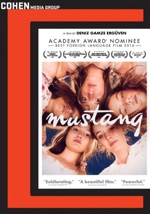
Five orphaned sisters being raised in the Turkish countryside by their uncle (Ayberk Pekcan) and their grandmother (Nihal G. Koldas) find themselves held virtual prisoners in their home when questions about their virtue are raised by a nosy neighbor. “The house became a wife factory,” says the youngest, Lale (Günes Sensoy), who is perhaps 9 or 10 years old, and through whose eyes we mostly witness events here, as she despairs at seeing her older sisters prepped for lives of subservience to men. Lale loves swimming and football and reading books — all of which are now denied to her, though she finds ways to sneak them, until her uncle finds new ways to strengthen their prison and further diminish and restrain her and her sisters.
The resilience of these exuberant girls is heartening… until it is squeezed out of them. Some of what we see here is extreme compared to supposedly more enlightened Western cultures, though not all of it: the older sisters’ ideas about how you can have sex and retain the technically required female (but never male) virginity sounds an awful lot like what fundamentalist Christian kids in the US believe. We might like to think Mustang is far removed from our ideas of “proper” womanhood, but it isn’t. More’s the shame to all of us.
Yet I am hopeful: this is the kind of wonderful, unexpected, necessary film we get when women — such as writer (with French screenwriter Alice Winocour) and director Deniz Gamze Ergüven, a Turkish-French filmmaker — give voice to the stories they have to tell. If only others will listen.
See also my #WhereAreTheWomen rating of Mustang for its representation of girls and women.

















We actually played this for two weeks a month or so ago, it’s a shame it didn’t catch on.
Beautiful review of an outstanding, powerful film.
Great review thank you. I dont see the comparison with Virgin Suicides and believe this is very different kind of film. Its a “profoundly political statement and a poetically beautiful story about femininity and feminism” (see my review) with particularly wonderful cinematography.