

This month marks the 25th anniversary of the death of Diana, Princess of Wales (yes, she still got to be called that, even after her divorce from Charles, the Prince of Wales). I vividly remember it, because I had literally just stepped in the door after attending the funeral of a close friend and turned on the TV as the news was breaking of the crash of her car in a tunnel in Paris, precipitated by the paparazzi chasing her in pursuit of juicy pix to sell to trashy tabloids.
Desperate for some distraction from my own personal, decidedly nonroyal grief, I remained glued to CNN for days, through the announcement of her death and the widespread gnashing of teeth and rending of garments that ensued in the UK. The public reaction of the Brits to her death, mobs of people wailing and sobbing outside Buckingham Palace, absolutely incensed me. I had just buried someone who, to this moment a quarter of a century later, is the person closest to me who has died — he was like the big brother I never had — and I thought: These people didn’t know her! They have no idea what it means to lose someone they love! How dare they behave like this!
In the intervening years, I have become somewhat more generous to the nice people of the UK when I think back to those days in 1997. But if I hadn’t already, the stunning documentary The Princess might have prompted a softening of my thoughts on this matter. Not that I am any fan of the British royal family. Quite the opposite. I do not understand any American who valorizes them — we fought a war to get rid of this appointed-by-God bullshit — and it seems to me that even the Brits should see that the institution is a horrific anachronism in the 21st century.
(I love — and by “love” I mean despair of — the argument that the royal family is good because they bring in tourists. Because you can actually go into the palace of Versailles in Paris anytime now because no king or queen lives there, which is not the case with Buckingham Palace. The historical deployment of guillotines has not lessened France’s appeal to royalty-stanning tourists one little bit. Not that, I hasten to add, I advocate guillotines for the British royal family. But they could just slink off to non-taxpayer-funded comfort and privilege, and that would be better for everyone.)
No, the thing is that I now understand that Diana represented, at the barest minimum, a possibility that the British royal family could potentially have modernized, and that her death signaled the end of that. Then, and apparently still. The fact that her second son, Prince Harry, now Duke of Sussex, has followed in her footsteps in absconding from royal life, because he seemingly had no other option if he wanted to retain his sanity, seems proof that whatever legacy Diana might have had remains partly hypothetical. And the current condition of poor Harry — honestly, I only ever started to like the guy once he ran the fuck away — might be the best recommendation for this film. Because he is continuing the unfinished smash-the-monarchy work that his mother began.
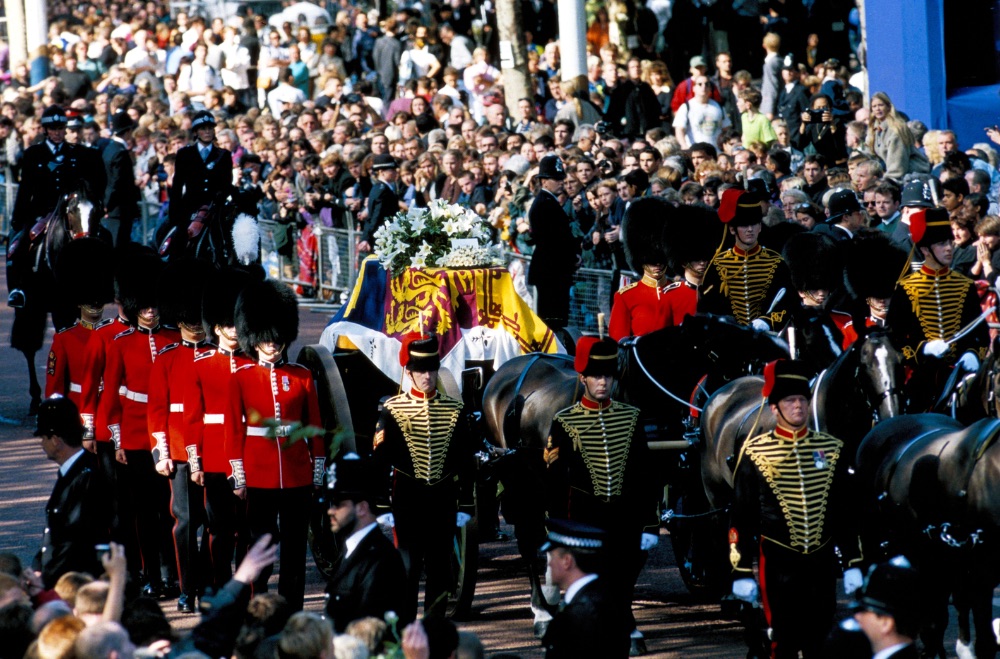
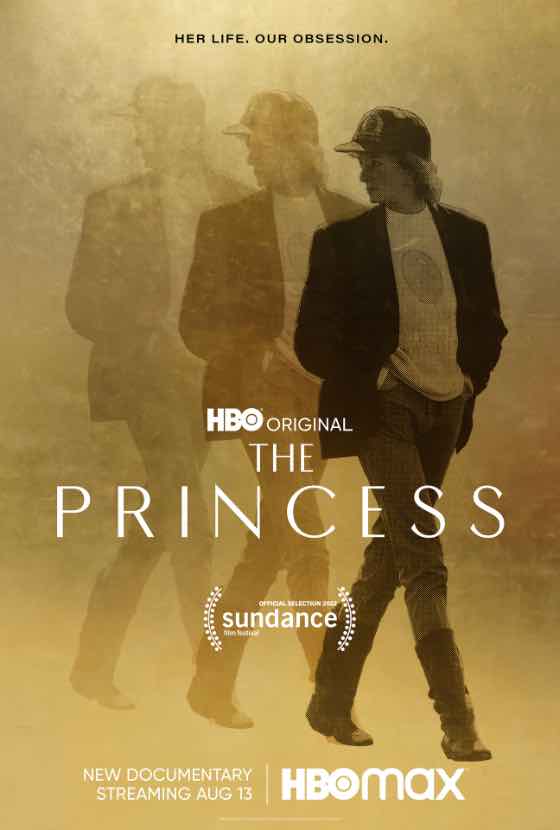
But I’m being a bit unfair. No matter what happens to the British monarchy in the coming years and decades, as pure documentary of a slice of time — of a slice that will one day be considered history, and might already be seen as such by anyone under 30 — The Princess is brilliant. Using nothing but contemporaneous archival footage, Oscar-nominated filmmaker Ed Perkins has assembled a portrait of Diana’s depiction in the spotlight that is incendiary, incisive, and transfixing. Starting with early-1980s news broadcasts, from the moment that her engagement to Charles was beginning to be rumored, this is a devastating indictment of celebrity “journalism.” Even if you believe that the comings and goings of the British royal family are newsworthy — though it appalls me to do so, I concede that there is an argument to be made for that — the way she was treated is clearly beyond the pale… and it is also very clearly a harbinger of the appalling celebrity “journalism” that was to come.
Cameras in her face, all the time. Vox-pop assessments of her life, and commentators who knew nothing — nothing — offering their nonsensical analysis: “There’s little reason to doubt that this is an affair of the heart,” one offers; after their “fairy tale” wedding in 1981, they would “live happily ever after,” another was sure. It’s a litany of horror, in retrospect, knowing what we know now, knowing what a sham Diana and Charles’s relationship was. But the clues and hints that disaster was in the making were there at the time, too. Sure, Perkins is picking and choosing the material to support his thesis, but wow, he sure was able to find lots of footage of Camilla Parker-Bowles, Charles’s then mistress, now wife, lurking in the background everywhere. She was even right there at the wedding! There must have been even outside observers who knew what was going on with Charles and Camilla, yet they held their tongues. Why?
There are moments, too, that even then should have struck absolutely anyone watching as atrocious and disgusting: “Her father, her uncle, and others have even vouched for her virginity,” one news commentator announces at the time of the engagement, with a kind of glee. (Ewww.) Perhaps some did see: one news report shows us a badge reading “Don’t Do It, Di” that was for sale at the time. (No word on how well the badges sold, but obvious someone saw red flags.) Through it all, Diana looks haunted, her eyes wary; she rarely looks genuinely happy… until after the couple’s separation, when, in the eyes of the press, Diana morphs from the “nice” and “shy” she was early on to “determined and domineering.” Jesus Christ, the collective condemnation of a woman finally exerting some agency over her own life is stomach-churning.
To be clear, The Princess is not about the “real” woman. No secrets are revealed here; there’s nothing behind-the-scenes about any of this. This is about how she was portrayed in the media. So this is an incredibly valuable look back not just at this specific story but at how public stories have been and continue to be shaped by media in recent decades. (This is before the Internet and social media dominated cultural discourse!) And not to the benefit of anyone at all: not the famous folk, and not our society at large. Well, except maybe to the benefit of the media that feeds on the public clamor for gossip, scandal, and real-life soap opera.
more films like this:
• The Queen [Prime US | Apple TV | HBO Max US | Disney+ UK | Netflix UK]
• Spencer [Prime US | Prime UK | Apple TV | Hulu US]


















The cultural appeal of monarchy — that the solution to an evil monarch is to replace them with a GOOD monarch — runs deep, though. It’s powerful storytelling. We cheer when Elsa becomes queen, when Anna becomes queen after her, when Aragorn returns as king. We’re inundated with Disney princess stories which never question the rightness of their hereditary positions. Thor and T’challa are kings; Asgard and Wakanda aren’t going to hold elections anytime soon. We get invested in who wins the Iron Throne, and when a single character brings up the fledgling idea of democracy at the end, all the other characters laugh (and we’re meant to laugh too). And “rightful monarch” stories are, of course, just a subset of “chosen one” stories, to which we’re addicted as well.
A lot of good will accrues to real-world monarchies because of this, I think, just as good will accrues to cops because of heroic-cop stories in our media. (Monarchganda?) Anyway, I think it’s going to take a lot to sort through all our cultural storytelling baggage and disenchant ourselves with the notion of monarchy.
You’re not wrong. But it really does rankle when supposedly patriotic Americans cheer a literal royal family that still exists and holds a certain degree of power and influence in the modern world (as opposed to fantasy royals, the enjoyment of which we can perhaps excuse… maybe).
I think a lot of it comes down to historical ignorance. It drives me ABSOLUTELY FUCKING BONKERS that some, ahem, people I know are able to reconcile a fetishization of their Irish heritage with a seemingly bone-deep love of the English royal family. Like, bish, do you KNOW what the English did to Ireland?!
I dunno. As always, I struggle to draw the line between “okay in fantasy, don’t endorse in reality” and “not okay in fantasy, because it reinforces what’s not okay in reality.” We say we’re not okay with misogyny in Game of Thrones because it reflects and reinforces misogyny in the real world. We say we’re not okay with copaganda stories because they reinforce support for cops in the real world. Should this reasoning lead us to not being okay with fantasy royals? I don’t have a clear answer yet.
You’re absolutely right. Which is why I qualified it with maybe. But if there’s an argument to be made, it might be that there is indeed a difference between a good monarch and a bad monarch, and drama to be found in stories about that. But there’s NOTHING good for anyone in patriarchy or misogyny.
I do think Wakanda, specifically, complicates this narrative a bit. Bear with me, I’m thinking this through as I type it, and also I am hesitant, as a white American, to make too much of a comparison between the African nations and modes of government seen in the Black Panther films and representations of white Western monarchy, both fictional and real; I simply do not feel informed enough to capture the nuance respectfully.
That said : when T’challa becomes king, there *is* an election, of a sort. All five tribes meet at the waterfall; every tribe has an opportunity to present a challenger to the throne; while votes are eschewed for physical combat, there is an actual competition, which actually matters when Killmonger returns to claim his right to the challenge in the first place. Now, of course there is still the concept of lineage as to who is even eligible to challenge, etc., and we also see T’challa’s rightful place as king (as you termed it, “the GOOD monarch”) reinforced through the narrative – although, I would point to your other example and say Thor’s abdication to King Vakyrie does a bit to subvert this. But that is to say, I think the monarchies in the MCU, at least, are if not challenged, at least poked with a stick.
I want to be clear, I think you make a very astute point, and I do not disagree! I merely find it interesting how those two examples, in particular, handle monarchy, and went on a tangent. Perhaps there is a connection to draw between Thor’s most recent character development in re: his relationship to the monarchy, and Prince Harry’s stepping away from the palace.
All that said, my perception seems to be many Americans are fine with monarchy Over There, but the running strain of American exceptionalism is almost reinforced by their royal family’s continued existence, because they may be appointed by God on their little island, but they have no power here in the good ol’ U S of A (please read this sentence with a heavily sarcastic intonation). And of course, fairy tale, royal fantasy escapism continues to run rampant, in addition to the myriad stories in which a monarchy is simply accepted as inherent, even if not directly coveted.
I don’t think the Wakandan waterfall contest is a critique of the idea of monarchy; the “fight for the throne” is a very common trope in monarchy stories, and it serves merely to reinforce the importance of the monarchy and who gets to sit on the throne. There are always challengers, pretenders, and usurpers, and then, as with T’challa, the ascendance of the One True King. Thor does abdicate to Valkyrie, but even that is a common move: the king designating his successor. Nothing in the Asgard or Wakanda stories suggests that those monarchies’ legitimacy is in question or that they should be dismantled in favor of democratic rule (though Waititi does critique Asgard’s hidden imperialism and peace achieved through bloody war.) It will be interesting to see if/how Ryan Coogler deals with the question of succession and of monarchy itself in Black Panther 2.
Very good point about Thor’s character and story opening up and becoming much more interesting and exploratory once he basically renounced the throne, much as Harry did.
I just think monarchy stories are more primal, more easily told and understood. Monarchies are the first form of government we learn about as children, through fairy tales and kiddie movies. We understand kings and queens and princes and princesses, and the line of succession from one generation to the next, almost instinctively; it takes more effort to learn what presidents and senators and congressmembers are, how they’re chosen, what they can and can’t do (a more complicated idea than kings, who are the sons of kings, who can do anything). Heck, if you’re raised a devout Christian, you learn about King Solomon and the pharaohs, and that heaven is a kingdom, and that Jesus is the “King of Kings”; no people’s republics to be found in the Bible. Monarchy is hardwired into our narrative brains, and it’s going to be hard to get over our fondness and affinity for royalty.