The Third Man (review)
What is *The Third Man* is no great mystery: it’s one of the greatest expressions of the noir attitude ever committed to film.

handcrafted by maryann johanson (human) | 100% free of AIs and algorithms
What is *The Third Man* is no great mystery: it’s one of the greatest expressions of the noir attitude ever committed to film.
In the wee hours of July 16, 1938, an insurance salesman Walter Neff sits down at a dictation machine in the offices of Pacific All-Risk in Los Angeles to record a confession. That guy Dietrichson, who died mysteriously? Neff killed him.
Thoughtful sobriety — the kind that gives The Silence of the Lambs and Seven their power to stun and shock — is the veneer that overlays the pointless cruelty of The Pledge. But thin indeed is that veneer.
Promising but a little unsteady on his feet with his first film, Lock, Stock and Two Smoking Barrels, writer/director Ritchie has graduated, with Snatch, to full-fledged cool-ass dude and filmmaker to watch out for.
State and Main, on the other hand, while the best movie about Hollywood since The Player, is a different kind of beast, one that doesn’t quite denigrate the Hollywood types so much as recognize that they are us, we are them, and we are all together. The quest for recognition and the need to tell stories are inherent attributes of our humanity, though they do get perverted sometimes, and not always in the places you’d expect.
Chocolat is an instant comfort movie. There isn’t a single event that transpires in the film that you cannot see coming from its opening moment, and yet it’s utterly appealing. And that appeal has a lot to do with how, well, comfortable a film this is. Director Lasse Halstrom doesn’t ask you to think too much about anything, but you can still feel sophisticated as well as warm and toasty, because the international cast and crew and Gallic setting will lull you into the sense that you’re consuming a Foreign Film.
Sneakers is just such a self-respecting techno-suspense flick, one that thought — rightly, at the time — it could get away with casting square Robert Redford as an ex radical hacker.
There’s a lot of typing in Antitrust, and when there isn’t typing there’s a lot of running up and down stairs. It’s very soothing, in an altered-mental-state kind of way, like banging your head rhythmically against a wall.
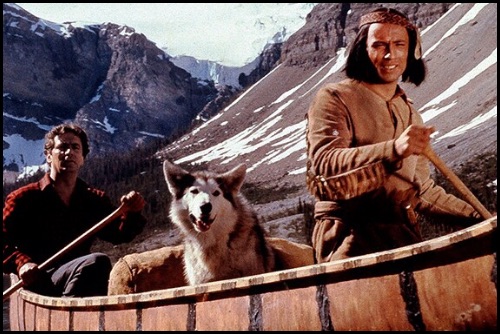
This gorgeously shot 1961 Disney movie is half awwww-inspiring romp through evergreen forests, half near-documentary about the Darwinian horrors of the food chain disguised as a kiddie flick.
Donaldson and screenwriter David Self keep a tight focus on a few offices and conference rooms in the Kennedy White House and the Pentagon to relate the chilling and surprisingly suspenseful story of a few days in which war as it was previously known ceased to exist, replaced by a new kind of combat employing the weapons of international politics and diplomacy.


 sample sponsored post (sponsored) - Lorem ipsum dolor sit amet, consectetur adipiscing elit. Fusce quis risus odio.


