
Sliding Doors movie review: doors open, doors close
How would my life be different if only I’d taken the road not taken? This fun little movie favors an inevitability, a brand of destiny about who we meet and what we do…

handcrafted by maryann johanson (human) | 100% free of AIs and algorithms
How would my life be different if only I’d taken the road not taken? This fun little movie favors an inevitability, a brand of destiny about who we meet and what we do…
Like a New England version of Northern Exposure, The Love Letter is full of intriguingly offbeat characters — from the nosy postmistress to the suspicious cop to Helen’s dotty grandmother (Titanic’s Gloria Stuart) to Miss Scattergoods (Geraldine McEwan), who works at the local historical society — with their own romantic secrets. Unsentimental and wonderfully modest, The Love Letter is that rare pleasure: a prickly yet succulent romantic comedy.
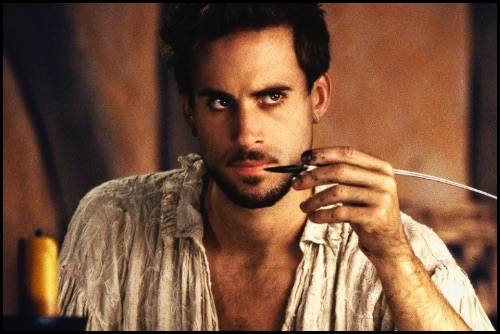
‘Love and a bit with a dog,’ that’s all audiences want, according to Philip Henslowe (Geoffrey Rush), owner of London’s Rose Theater. A bit of romance, a bit of comedy — isn’t that really all that movie audiences, too, are after? Shakespeare in Love has both in spades, and it’s the first film of its kind to win Best Picture since 1977’s Annie Hall.
With Forrest Gump, the fable of the dimwitted but goodhearted Alabaman who was, in his own words, a ‘football star, war hero, national celebrity, and shrimp-boat captain,’ director Robert Zemeckis takes his work to a new level of maturity. His previous films are, for the most part, fun and highly entertaining, but Forrest Gump has an intricacy and depth that is more rewarding while still being enormously engaging.
Atlantan Miss Daisy Werthan (Jessica Tandy) is a ‘fine, rich, Jewish lady,’ says her black chauffeur, Hoke Coburn (Morgan Freeman). Driving Miss Daisy is the bittersweet drama about the unspoken friendship between this unlikely pair over a quarter of a century, from 1948 to 1973.
Barry Levinson’s Rain Man was so seminal a film that its title character’s nickname and dialogue have entered the vernacular — we’ve all said ‘Kmart sucks’ and ‘I’m an excellent driver’ once or twice, right? Beneath the film’s gentle odd-couple comedy and astonishingly affecting performance by Dustin Hoffman as the autistic savant Raymond Babbitt, however, is a sharp drama about emotionality, frustration, and the capacity we all have for surprising ourselves by changing.
It’s a complicated love/hate relationship that mothers and daughters share. They can be each other’s best friend and worst enemy, often at the same time. Terms of Endearment perfectly captures that morass of conflicting emotions — at least from the daughter’s point of view, as I can testify from personal experience.
The Sting is pretty universally acknowledged as one of the best films ever made. From the flawless performances all round to the clever script, this is movie magic that approaches a kind of wizardry. Not a note is out of place — every line, every scene builds on what’s come before until it ends so breathlessly and abruptly that it leaves you astounded at its audacity. Lonnegan’s not the only one who gets conned; writer David S. Ward and director George Roy Hill sting the viewer, too. This is just about as perfect as movies come.
My Fair Lady — another musical from Gigi creators Lerner and Loewe — is a charming and amusing satire on the absurdity of rigid class distinctions such as were to be found in turn-of-the-century London.
Only a man could have written this movie (it was Billy Wilder, and he directed, too). And only men could have written all the glowing reviews of The Apartment that I’ve found both online and off. The Apartment is a perfect demonstration of why ‘nice guys’ get a bad rap from women, but that seems to go right over the head of all those men praising it.


 sample sponsored post (sponsored) - Lorem ipsum dolor sit amet, consectetur adipiscing elit. Fusce quis risus odio.


