
Anvil! The Story of Anvil documentary review
I’m still not 100 percent convinced that this wonderfully bittersweet documentary isn’t entirely a put-on.

handcrafted by maryann johanson (human) | 100% free of AIs and algorithms
I’m still not 100 percent convinced that this wonderfully bittersweet documentary isn’t entirely a put-on.
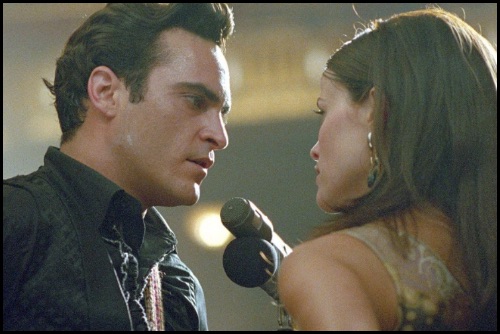
I left the screening room on Monday afternoon with Johnny Cash’s voice— no, with Joaquin Phoenix’s where’d-he-get-that-from baritone echoing in my head…
So what the Coens did with O Brother, Where Art Thou? is this: They transported Homer’s epic poem The Odyssey to this filmic otherworld of theirs, turning what is perhaps the original on-the-road story into a Depression-era fantasia that wants more for you to recognize the clever fun they’re having with filmmaking conventions of the 1930s than whether you know the least thing about ancient literature.

Christopher Guest’s Best in Show is another hilarious and poignant mockumentary that, in the vein of his Waiting for Guffman, pokes gentle fun at its fictional subjects as well its audience.
White Christmas is billed as a remake of Holiday Inn, but the only thing these two films have in common is Bing Crosby singing the most beautiful secular Christmas carol, Irving Berlin’s ‘White Christmas’ (which was originally written for Holiday Inn). White Christmas isn’t as delightful as its supposed predecessor, but if for no other reason, it’s worth seeing for a gorgeously simple arrangement of the title tune, which Crosby croons accompanied only by a windup music box.

God, I love those snarky 40s comedies in which there’s just a bit of meanness under the humor. Holiday Inn is, of course, filled with the kind of pretty Christmas songs and picture-postcard scenes of snow and horse-drawn sleighs that make for beloved holiday movies. But there’s also some darkness lurking here.
Is Antonio Salieri (F. Murray Abraham, in a virtuoso performance he has yet to match) insane? Amadeus opens with an old, bitter Salieri living out his last days in an asylum, where he’s been relegated following a suicide attempt. The film’s story, and the story of his life, unfolds as he confesses to a priest how, and why, he killed Wolfgang Amadeus Mozart.
Get past the set pieces that date the movie and make it twice as long as it might be, and The Great Ziegfeld — a biopic of theatrical impresario Florenz Ziegfeld Jr. — is a moving story of how the weaknesses and obsessions that ironically made one man a powerful entertainment mogul inevitably brought about his downfall.


 sample sponsored post (sponsored) - Lorem ipsum dolor sit amet, consectetur adipiscing elit. Fusce quis risus odio.


