Titanic (again again) (review)

A film of immense power and eerie beauty, James Cameron’s Titanic could only have been made now, not because of its technical requirements but because the cultural attitudes of the era in which it is set have come full circle to concern us again today.
Braveheart (review)

Braveheart has a primal, visceral power — as when Wallace, in the aftermath of a battle, stands over the carnage he’s wrought and screams in victory, nostrils flaring — that strikes straight to the heart of any warm-blooded Celt, or indeed anyone who values freedom and human dignity.

Forrest Gump (review)

With Forrest Gump, the fable of the dimwitted but goodhearted Alabaman who was, in his own words, a ‘football star, war hero, national celebrity, and shrimp-boat captain,’ director Robert Zemeckis takes his work to a new level of maturity. His previous films are, for the most part, fun and highly entertaining, but Forrest Gump has an intricacy and depth that is more rewarding while still being enormously engaging.

Schindler’s List (review)

While Schindler’s List is the least Spielberg-ian and least showy of the director’s work, it demonstrates an artistry that is at times highly stylized. The film is a study in contrasts and ironies.

Unforgiven (review)

‘It’s a hell of a thing, killin’ a man,’ says thief and killer William Munny (Clint Eastwood, who also directed) in Unforgiven. ‘You take away all he’s got and all he’s ever gonna have.’ Practically an antimovie, this revisionist Western rejects the concept of casual murder that many films revel in to examine why ‘it ain’t so easy to shoot a man.’

The Silence of the Lambs (review)

The Silence of the Lambs is a psychological thriller of the highest order, and well deserving of the unusual Oscar nod for Best Picture, never before bestowed upon a film like this. Before or since, action/horror has never been done so well or so cerebrally.

Dances with Wolves movie review: native son

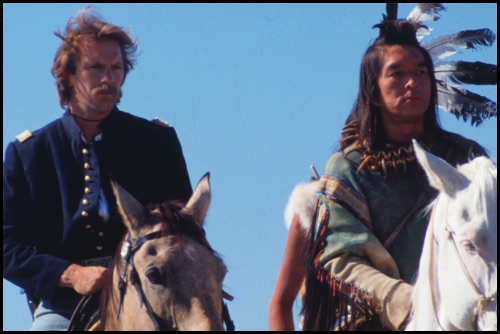
Dances with Wolves is one of the most visually and emotionally stunning movies I’ve ever seen, a glimmer of another world where less might have been lost if more people had been as open and friendly as John Dunbar. From John Barry’s stirring score to director/producer Costner’s daring presentation of a huge chunk of the movie in the beautiful Sioux Lakota language (with subtitles), this is a majestic requiem for a world that is gone.

Driving Miss Daisy (review)

Atlantan Miss Daisy Werthan (Jessica Tandy) is a ‘fine, rich, Jewish lady,’ says her black chauffeur, Hoke Coburn (Morgan Freeman). Driving Miss Daisy is the bittersweet drama about the unspoken friendship between this unlikely pair over a quarter of a century, from 1948 to 1973.

Rain Man (review)

Barry Levinson’s Rain Man was so seminal a film that its title character’s nickname and dialogue have entered the vernacular — we’ve all said ‘Kmart sucks’ and ‘I’m an excellent driver’ once or twice, right? Beneath the film’s gentle odd-couple comedy and astonishingly affecting performance by Dustin Hoffman as the autistic savant Raymond Babbitt, however, is a sharp drama about emotionality, frustration, and the capacity we all have for surprising ourselves by changing.