Bossa Nova (review)

The lovesick round-robin — Joe loves Mary, Mary loves Bill, and Bill loves someone else — is a fairly standard plot for romantic comedies, but it feels freshly deployed in director Bruno Barreto’s light and airy Bossa Nova. Set amongst the palm trees and sandy beaches of Rio de Janeiro, this bittersweet story follows a series of flirtatious entanglements between Brazilians and ex-pat and visiting Americans, most of whom have given up on love but find themselves persuaded to give the relationship game one more try.

The Flintstones in Viva Rock Vegas (review)

I’ve heard of suffering for your art. But I don’t think I should have to suffer for someone else’s art. Not that The Flintstones in Viva Rock Vegas qualifies as art — in fact, it could only be called a “creative” endeavor in the widest, most liberal use of the term. Yes, images that had never been seen before were committed to film. But why?

Carnosaur (review)

Roger Corman Presents Carnosaur. And that’s pretty much all you have to know. Made quickly and on the cheap to cash in on the Jurassic Park craze in 1993 and sent directly to video without its supper, this 1950s-style cautionary SF tale is just like Spielberg’s dino movie, only really sucky and so bad it’s funny.

Enslavement: The True Story of Fanny Kemble (review)

Enslavement: The True Story of Fanny Kemble, a Showtime Original movie, tells her previously untold story. Before I realized how important Kemble’s work was, I couldn’t help but approach the film thinking, Gee, here’s one more flick about white folks feeling guilty about slavery. But the thought that Enslavement is righting an historical oversight goes a long way to putting that misgiving to rest. And the film itself, surprisingly moving and frequently quite disturbing, is careful not to impose too contemporary an attitude on its characters, letting them be the people of their time that they were.

The Last September (review)

Two worlds are coming to an end in Deborah Warner’s warm and involving The Last September. The first is that of the Anglo-Irish, “the tribe [that] ruled Ireland on behalf of the British” for centuries, until Ireland won its independence. The other is the carefree girlhood of 19-year-old Lois Farquar, who’s not so grown-up as she thinks she is as the film opens, and is more grown-up than she wants to be at its end.

Croupier movie review: zen and the art of dealing

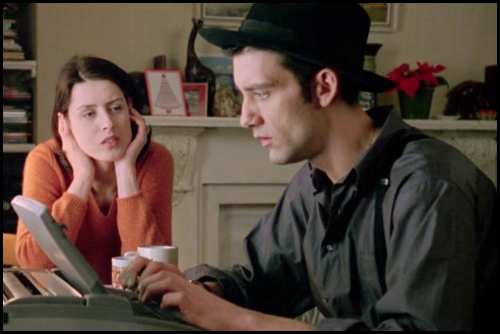
The 1998 British film Croupier, only now getting a limited American release, was made well before the recent Reindeer Games, but comparing them is too delicious an opportunity to bash Hollywood to let pass by. Both have the same conceit of their cores: a Christmas Eve casino heist. In Hollywood’s eyes, this is a chance to show us Santas with machine guns running amuck, and not much else. In the hands of legendary British director Mike Hodges, who made the 1971 classic Get Carter, and equally legendary screenwriter Paul Mayersberg, who wrote The Man Who Fell to Earth, it becomes a spare, seductive, almost novelistic suspense drama in which the biggest crime is its protagonist’s misunderstanding of himself.

The Virgin Suicides (review)

This is probably terribly unfair to The Virgin Suicides, but I am extremely tired of seeing girls and women depicted onscreen not as human beings but as idealized, goddesslike visions. I’m tired of seeing male obsession and pursuit of unrealistically gorgeous and unattainable women as, once again, of supposedly universal interest and appeal. I am tired of seeing male adolescent sexual fantasies as deeply symbolic of life, the universe, and everything. But these are the themes The Virgin Suicides wants so desperately to present to us as fresh and new. Which is why I found the film so very disappointing.

U-571 (review)

You don’t need to have seen the trailer for U-571, which lays out the entire movie for you, to be able to predict the major plot points a nautical mile away. An unintentional parody of war movies, chock full of cliches both hoary and brand-spanking new, U-571 is nevertheless good clean silly fun, though I’m sure writer/director Jonathan Mostow was aiming for high drama, not high cheese.

Double Jeopardy (review)

If I shout ‘Crap!’ at an Ashley Judd movie, and no one cares, does it make a sound? No, wait: If Ashley Judd craps in the woods and everyone’s there to see, is it a crime? Sometimes murder isn’t a crime, the producers of Double Jeopardy would like you to think. But bad movies almost always are. No matter how well they do at the box office.