Toy Story 2 (review)

Funnier and more touching and meaningful than its predecessor, Toy Story 2 is the rare sequel that improves upon its progenitor — and, considering how wondrous Toy Story was, that’s saying something. Toy Story — as funny and fun as it was — was also bursting with joy, with the delight the filmmakers obviously took in bringing a roomful of toys to life. Toy Story realized that secret childhood fantasy we all had, that our toys had lives of their own, that they played with one another when we weren’t around.

The Iron Giant (review)

Like all great animated films, The Iron Giant is at least as enthralling to grownups as it is to their kids. This one is an instant classic. In a way, I’m sorry there are no “no one understands me” and “oh no this is our darkest hour” songs here, because listening to a soundtrack over and over would be a way to relive the movie — the way I do with the Disney greats — again and again. (I’ll have to settle for Pete Townsend’s The Iron Man CD, which is also based on the children’s book by Ted Hughes and sort of serves as a soundtrack to the film. Townsend, in fact, executive produced The Iron Giant.)

Jingle All the Way (review)

Alas, Jingle All the Way may be the most realistic Christmas movie ever made. After all, what says “Christmas” more these days than the spectacle of supposed grownups clawing tooth and nail for the season’s hot toy in an effort to indulge their ignored and neglected and simultaneously spoiled rotten TV-addled brats?

2 By 4 (review)

Jimmy Smallhorne’s 2 By 4 — he cowrote, directed, and stars — is triply frustrating for me, because it’s set in a world I know, peopled with people I know. I don’t mean ‘the kind of people I know.’ I mean: I know the man whose life inspired 2 By 4, and I still felt like an outsider by the end of the film.

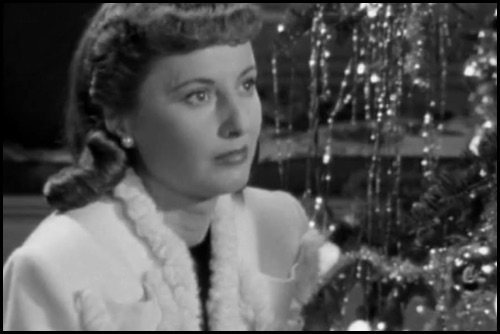
It’s a Wonderful Life (review)

Remember that ‘alternate ending’ of It’s a Wonderful Life that Saturday Night Live came up with years ago? George never finds out what happened to that $8,000 that nearly ruined him, and the film ends on a happy note when the townspeople pitch in to raise the money. SNL’s ending was a little darker: Someone discovers that Potter has George’s money, and so we’re treated to the spectacle of Dana Carvey as Jimmy Stewart leading a lynch mob: ‘Well, let’s get ‘im!’ Carvey’s George cries. That’s more the ending I’d like to see.

Meet John Doe (review)

No, it’s not It’s a Wonderful Life. I’m talking about Frank Capra’s classic Meet John Doe, released five years earlier in 1941. It’s not traditionally considered a Christmas movie, and yet it’s at least as deserving of that status as Life — and maybe even more deserving. And while It’s a Wonderful Life feels dated, Meet John Doe is still startlingly relevant today, nearly 60 years after it was first released.

End of Days and Die Hard with a Vengeance (review)

A sense of place is vital in almost any film, but I think it’s especially important in an action movie, which by definition is moving around that place so much. Now, End of Days isn’t bad merely because it can’t get New York City right, and Die Hard with a Vengeance isn’t good merely because it does. But how these two movies use — and misuse — New York is illustrative of the films’ relative failure or success on a larger scale.

Song of Hiawatha (review)

Based on the epic poem by Henry Wadsworth Longfellow, Song of Hiawatha (which debuted on the cable network Showtime on Thanksgiving Day and is also available on video) is a likable introduction to Native American history and legend. Some of its young, mostly Native American cast are a bit too modern in their demeanor and the delivery of their dialogue for this to be taken as a serious historical film, but Song is respectful — almost reverential — in its presentation of Native American religious beliefs and cultural attitudes, which isn’t something seen onscreen often enough.