
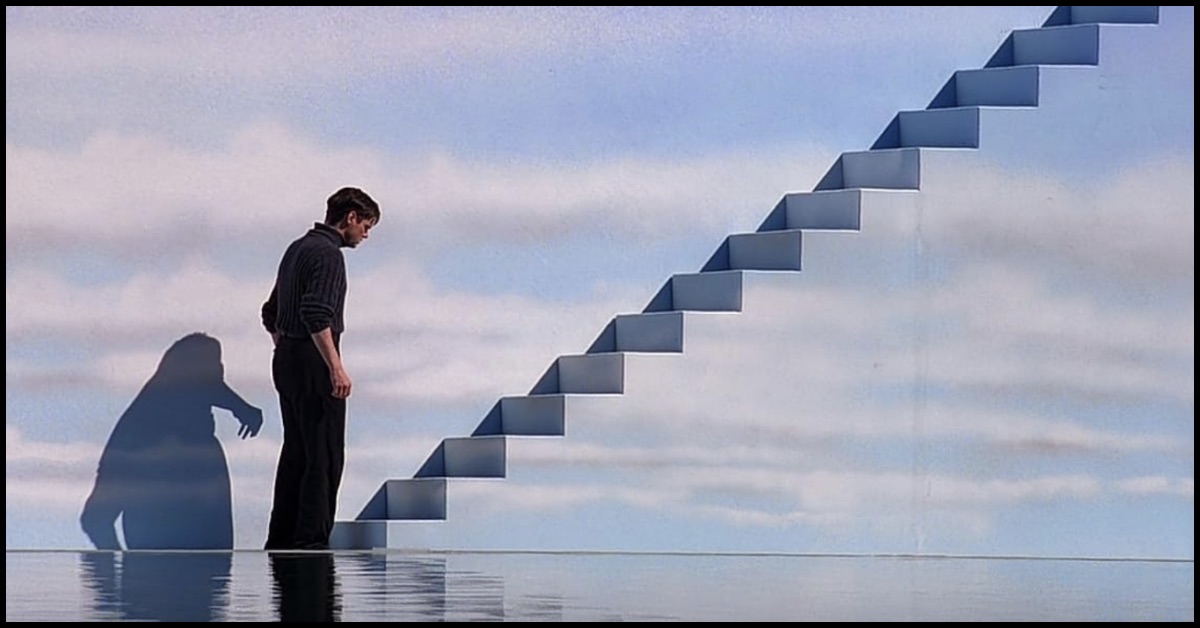
A deceptively simple question this week: What are the all-time great movie endings? But what makes a great ending?
I absolutely love the ending of 1998’s The Truman Show, because it’s so perfectly attuned to the themes of the film: Jim Carrey’s Truman escapes his fishbowl existence and we have no idea what happens to him after that, because it’s none of our business, as his life previously should not have been, either.
Your turn. Assume lots of spoilers in comments!
(You can also discuss this at Substack or Patreon, if you prefer. You don’t need to be a paying subscriber to comment, but you will need to register with either site to do so.)














From Burn After Reading, pretty much the only movie that has ever showed how Washington *actually* works:
[last lines]
CIA Superior : What did we learn, Palmer?
CIA Officer : I don’t know, sir.
CIA Superior : I don’t fuckin’ know either. I guess we learned not to do it again.
CIA Officer : Yes, sir.
CIA Superior : I’m fucked if I know what we did.
CIA Officer : Yes, sir, it’s, uh, hard to say.
CIA Superior : Jesus Fucking Christ.
It’s been decades since I saw Raiders of the Lost Ark, but the ending is just cynical enough—almost tragic, almost hilarious—to stick with me into adulthood.
Yes, this occurred to me as one I should highlight… but I feel like I talk about Raiders way too much! 😂
there are a lot of great movie endings
Casablanca – Rick: Louie, I think this is the beginning of a beautiful friendship.
Planet of the Apes – George Taylor: Oh my God. I’m back. I’m home. All the time, it was… We finally really did it.
[screaming] George Taylor: You Maniacs! You blew it up! Ah, damn you! God damn you all to hell!
Yup, good ones!
The end of Solo Sunny. Sunny, battered throughout the entire movie by her attempts at becoming a star in late 1970s GDR, has dusted herself off and started anew, marching into an audition to sing for a new band with a new funk/jazz style.
It’s a fairly Hollywood ending for a bleak 1970s GDR film, but as hopeful as the ending is, it’s in no way certain that she’s going to be any more successful given the ups and downs of the plot. Naturally, the film was banned for suggesting in any way that the GDR had lost its way and needed renewal.
I’ve never heard of this movie!
“You don’t understand — I’m a man!”
OSGOOD: “Well, nobody’s perfect.”
The best four endings I know have in common that they are silent, almost completely visual: no dialogue (maybe some in the background), no voice-over, nothing. In chronological order:
The third man (Reed, 1949)
Un flic (Melville, 1967)
Sous le sable (Ozon, 2000)
Call be by your name (Guadagnino, 2017)
Of these four, the one I like most (not the entire movie but its ending) is Un flic. Detective Alain Delon and his partner driving along the Champs Elysées, not saying a word to each other. Minutes before, Delon had to kill his friend, a gentleman-crook. The scene in the car is perfect in showing both Delon’s mourning and his partner’s silent respect. Sometimes images truly say (much) more than words.