BASIC REPRESENTATION SCORE: +12
FEMALE AGENCY/POWER/AUTHORITY SCORE: +10
THE MALE GAZE SCORE: 0
[no issues]
GENDER/SEXUALITY SCORE: -5
WILDCARD SCORE: +5
Is there anything either positive or negative in the film’s representation of women not already accounted for here? (points will vary)
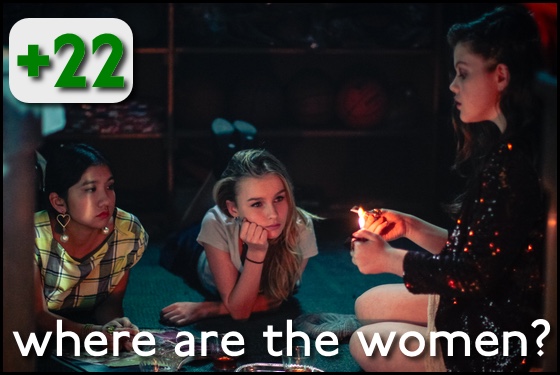
An ensemble rather than one primary protagonist often means that most characters get short shrift, but the members of the mostly female ensemble here are sharply sketched and very distinctive, offering a shrewd landscape of various anguishes of female adolescence.
TOTAL SCORE: +22
IS THE FILM’S DIRECTOR FEMALE? Yes (Caryn Waechter) (does not impact scoring)
IS THE FILM’S SCREENWRITER FEMALE? Yes (Marilyn Fu) (does not impact scoring)
BOTTOM LINE: The mostly female ensemble here are enduring a variety of teenaged problems that have nothing to do with romance or fashion, and everything to do with the specific ways that girls interact with one another. Even the traditional teen worry about popularity is treated with far more psychological sensitivity and insight than the standard teen movie.
Click here for the ongoing ranking of 2015’s films for female representation.
NOTE: This is not a “review” of The Sisterhood of Night! It is simply an examination of how well or how poorly it represents women. (A movie that represents women well can still be a terrible film; a movie that represents women poorly can still be a great film.) Read my review of The Sisterhood of Night.
See the full rating criteria. (Criteria that do not apply to this film have been deleted in this rating for maximum readability.)
This rating is brought to you without paywall restrictions by my generous Kickstarter supporters. If you missed out on the Kickstarter and would like to support this project, you may:
• become a monthly or yearly subscriber of FlickFilospher.com
• make a pledge at Patreon
• make a donation via Paypal