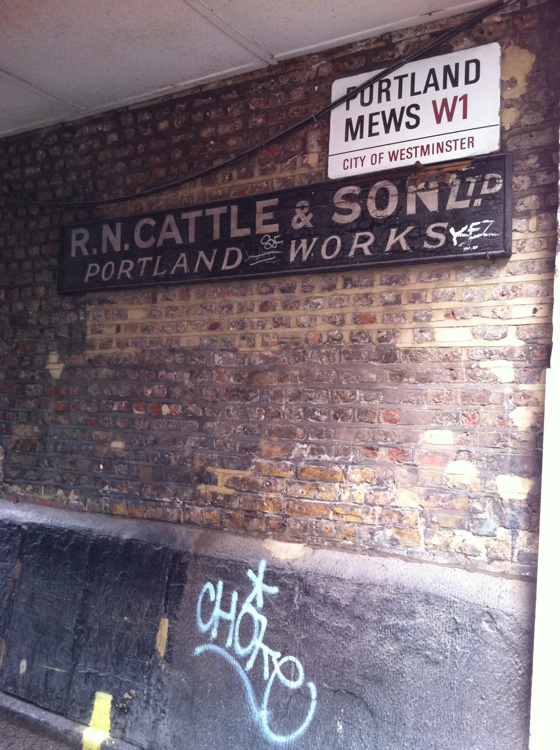
I’d love to know what sort of business R.N. Cattle and Son were in. (In Soho.)

handcrafted by maryann johanson (human) | 100% free of AIs and algorithms
I’d love to know what sort of business R.N. Cattle and Son were in. (In Soho.)


 sample sponsored post (sponsored) - Lorem ipsum dolor sit amet, consectetur adipiscing elit. Fusce quis risus odio.














I couldn’t find anything on Mr Cattle, but Portland Works seems to be (have been?) a company involved in early steel production in Sheffield (see http://www.portlandworks.co.uk/ for an extensive history), so my guess is that Mr Cattle was their representative or reseller in London.
Portland Works seemed to have had a line in cutlery, so maybe Mr Cattle only sold those products.
That’s about as far as I could get using Google.
“Portland works” might instead refer to Portland stone (a limestone used extensively in building) or Portland cement (the standard cement these days, in use from the 1820s onwards).
On the other hand, the whole of the eastern half of Marylebone was owned by the Dukes of Portland during the 18th and 19th century; Portland Mews is a bit far south for that, but it’s a plausible reason for the name.