
What my followers on Facebook, Twitter, and Google+ saw today:
• Yeah, cuz what fantasy! It’s not like real women are strong or anything, so why would a writer feel moved to *invent* strong women? “Why do you write strong female characters?”
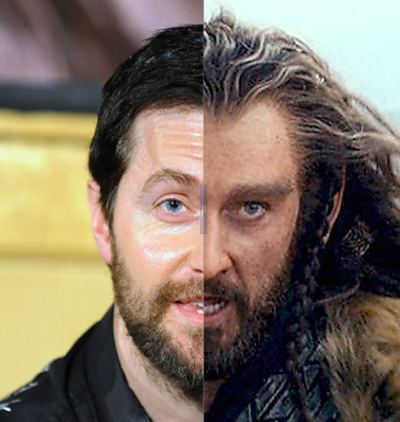
• Cool! The Hobbit’s amazing transformations
• It’s amazing how terrified our culture is of women who refuse to be ashamed of their bodies… The Audacity of Lena Dunham, And Her Admirable Commitment To Making Us Look At Her Naked
[This was posted at the Facebook page of the Alliance of Women Film Journalists.]
• And we should be surprised by this why…? Congressional Offices Continue to Illegally Download Movies and TV Shows
• Check out this movie clip, 85 years old, set in the London Underground… Underground: watch a clip from Anthony Asquith’s thriller set on London’s tube – video
• Love. This is a scene I would love to see.
• Bigelow rightly reminds us that the mere depiction of a Bad Thing is not necessarily endorsement. But the *way* a Bad Thing is depicted certainly can imply endorsement… Kathryn Bigelow addresses ‘Zero Dark Thirty’ torture criticism
(hat-tip for today’s links: Vulture)














Joss Whedon also answered the question well,
Q: “Why do you keep writing strong female characters?”
A: “Because you keep asking me that question.”
I’d much rather ask Whedon “Why do you keep writing damaged female characters?”
To be fair, all his characters tend to be damaged goods to some extent. Because that’s more interesting.
Whedon likes damaged goods the way Tarantino likes feet.
That’s cute, but there’s a difference between a visual affectation–like a fondness for feet or lens flare–and story elements like theme and characterization. When Joss Whedon writes about damaged characters, male or female, he writes about why they’re damaged and the ways that damage affects the decisions they make and their relationships with the people around them. There is also, on occasion, social commentary. The damage isn’t a fetish. It’s storytelling.
I don’t think Mate was trying to make a one-to-one comparison. Rather, I think he was intimating that these represent “trademarks” for the two men, things you can count on them doing, for whatever reasons they have. Of course, that doesn’t really answer Roger’s question.
That is pretty much what I meant, yeah. Thank you Dr. Rocketscience for condensing my thoughts for me and saving me the mental effort :-)
Oddly enough, I’ve noticed over time that Whedon also likes feet, specifically the naked feet of attractive women. Seriously.
I’m all for people being unafraid to show it off, be it imperfect bodies or whatever, but when I saw Lenham’s nude scene in “Girls”… I threw up in my mouth a little bit. There are some people who look better with their clothes on… not just normal folks like Dunham, but conventionally beautiful ones like Julie Delpy too.
Same for the guys too.
Movies are stories. Lena Dunham’s movies and TV shows are stories about young women who are sexually active. The point of the story–and I’m sure you know this–isn’t that she looks good with her clothes off. The point is that she’s living her life, and the story has to include the details of that life, whether they turn out to be ugly or funny or empowering or sad.
Some episodes of Girls are stories about what happens to a person when everyone keeps telling her she looks better with her clothes on.
I enjoy looking at pretty people, just like you. Every time I see The Adventures of Baron Munchausen, I want to watch Uma Thurman’s big entrance scene over and over again. But it gets a little tiresome to see the same few body types in every movie. When I saw Zero Dark Thirty, I thought: Was every woman in the CIA an attractive blonde or redhead? It was a little depressing–even though I like attractive blondes and redheads–because it reminded me that I’m not Hollywood’s preferred body type. Sometimes going to the movies feels like being picked last for the volleyball team.
There’s nothing wrong with stories about people who are prettier or luckier or more popular than you. They’re one of life’s great pleasures. But we need other kinds of stories, too. Otherwise, the message of the movies becomes: You’re living your life wrong. There are enough people telling us that already, and–apparently–some of those people post on film discussion sites.
That’s true. And Dunham has the clout and creative control to do what she wants (it is her show after all)… but she doesn’t have to get naked like in every other episode.
A little bit goes a long way.
Well, howdy there Matt! I just bitch-slapped you on an earlier post here on flickfilosopher.com, the one about the Golden Globes… and here I find you sharing exactly the same sad vomit-in-your-mouth opinion again with regard to Lenham’s body.
I repeat, from the previous post:
I’ve been drawing the human form in life classes since I was 16 years
old and find your comment about Dunham’s nude form incredibly provincial
and not a little sexist. I get that you do not find her sexually
attractive, fair enough; but a woman’s body isn’t always about whether
or not you want to schtupp her. I’ve drawn fit young people and the
elderly, the obese and the reed-thin; I’ve drawn varicose veins and
rippled abs, breasts both pendulous and perky. People’s bodies are
*always* interesting, and they should not be ashamed of who they are and
what they look like. And frankly a young woman is going to be a sexual
being whether or not you find her so. Please adjust your male gaze and
try to cultivate a more cosmopolitan attitude about nudity.
And I hasten to add: you needn’t constantly share with the rest of the world the deets on what your preferences for sexual partners are or aren’t — a little of that sort of thing goes a long way.
Mark LeVine on Bigelow:
“Bigelow’s claim that “depicting” torture is in no way the same as “endorsing” is particularly disingenuous given that her critics have clearly argued that it’s the lack of accurate context in which it occurred, not the depiction itself, that is so problematic. Similarly, her argument in defence of her focus on the use of torture – that it was a part of the “history” the film explores and thus had to be represented – only works to the extent the film accurately reflects the actual events and conflicts surrounding torture’s use, which it does not do.”
http://www.aljazeera.com/indepth/opinion/2013/01/201311212126424914.html
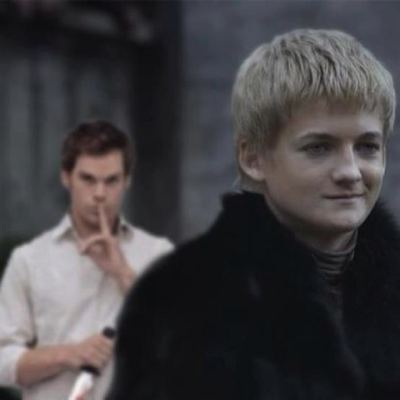
I’m still surprised that MaryAnn got a Dexter reference, given that she doesn’t seem to be a big fan of that show.