

I’m “biast” (pro): love the cast
I’m “biast” (con): nothing
(what is this about? see my critic’s minifesto)
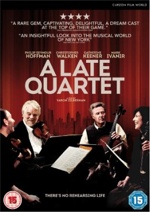
You can’t stop, even if you screw up, even if — when — your instrument goes out of tune. There’s the long and complex piece of his music that Beethoven instructs you play like that, but it applies to life, too. If A Late Quartet lays on the metaphor a little too thickly, all is preforgiven, even before you realize that’s what’s happening, by the sheer joy of getting to watch Christopher Walken (Seven Psychopaths), Catherine Keener (The Croods), and Philip Seymour Hoffman (Moneyball) rattle around one another, pissing everybody off and trying to keep things together even when it seems like everything between them is irrevocably broken. They’re members of a renowned New York City string quartet, also including leader Mark Ivanir (Big Miracle), that is forced down from the high of their 25th anniversary together by the news that Walken’s cellist is retiring — has to retire, thanks to a diagnosis of Parkinson’s that will shortly make playing impossible. The announcement shatters the group’s cool calm, which reveals itself to have been the sort of facade that often hides long-simmering resentments and unvoiced needs among people who know one another long and well… or not so well as they believed, perhaps. Though there’s too much preposterous melodrama in how the upset plays out among the group — which also includes Imogen Poots’ (Fright Night) violin student and daughter of married couple Hoffman and Keener — and a too-pat resolution, the performances all around are so effortless in their rumpled capture of messy real life that watching them is akin to breathing out a cinematic sigh of relief: so this is what a grownup movie looks like! And director Yaron Zilberman — making his feature debut from a script he wrote with Seth Grossman — renders Manhattan a character in itself, an elegant dowager who witnesses much pain but keeps her own counsel. (One whispered argument in the back of taxi places us in the position of the unseen cab driver who can’t help but listen yet keeps all secrets.) The misplaced notes aren’t invisible, but they don’t detract too greatly from the overall symphony.
















Do we get to listen to any rich pieces of classical musicgasms of consequence or is it strictly story?