
The Guardian has an excerpt from a new memoir by actor and filmmaker Sarah Polley in which she details working on his film The Adventures of Baron Munchausen as an eight-year-old.
The brutal headline: “‘It took me years to see how responsible Terry Gilliam was for my terror.’” And it’s full of stuff like this:
There were many special effects in the film; scenes of battle, exploding bombs, space and moonwalking. As we were about to shoot a sequence involving explosives, Terry led me down a route I was to run through – the set of a bombed-out city. I was told there would be explosives going off as I ran, but I wasn’t concerned. It would all be perfectly safe, I was told. I was given two cotton balls to put into my ears in case the sound was too loud for me. After Terry yelled “Action!” I began my run as instructed. Blasts of debris exploded on the ground around me, accompanied by deafening booms that made me feel as if I myself had exploded. A log I was to run under was partially on fire. The gigantic blasts continued and shook everything around me. I ran, terrified, straight into the camera, tripping over the dolly tracks.
Terry laughed and looked perplexed. “What happened?” he asked, as though I had just run screaming from a slow-moving merry-go-round. I couldn’t breathe. It didn’t seem possible that this could have been the plan, that things hadn’t just gone terribly wrong. But they hadn’t. This was the plan. And I had just ruined the take. I was mortified. It took a long time to reset the take and while Terry didn’t show any frustration about the delay, he also didn’t seem to notice how scared I was.
(It gets worse.)
Polley shares an email exchange between herself, from the early 2000s, when she was now an adult and a budding director, and Gilliam, in which she gives him her perspective of being on his set, prompted by her learning that he was going into preproduction on a new film featuring a young girl. (That film would be Tideland, which landed just outside my top 10 for 2006.) She carefully tiptoes around his ego as she explains how scared she was during the shoot: she’s respectful, deferent, but does not downplay her experience. You cringe to read it, to see how she gaslights herself in it (I am confident, based on what she writes later, that she would agree that she was gaslighting herself here), and as you anticipate his response to this unloading of hers.
How he reacts is… quite something. And then how other people — including some who were on the set of Munchausen, such as Eric Idle — react to those emails and when she shares her memories of the set with them, is a whole ’nother level of Quite Something.
The fact that Gilliam agreed that Polley could make their exchange public (it has been public for many years now) is its own testament to his self-absorption and his narcissism, particularly given what else we learn about that production. Polley makes no bones about what is at play here, and it’s a microcosm for Hollywood in the main:
I think the truth is that I let Terry off the hook in part because, even as a child, I had bought into the glamour of the idea of the enfant terrible director, the out-of-control mad white male genius – a myth that has dominated the film industry’s understanding of what brilliance must necessarily look like. As an adult, I find myself wholly intolerant of the fetishisation of this archetype of genius, having seen, first-hand, great works made by decent, conscientious people, and having witnessed sharp impatience with female or Bipoc [Black, Indigenous and people of colour] film-makers who show any similar signs of irresponsibility. Terry lived for so long in the film world’s imagination as a “mad genius” whose madness and recklessness somehow elevated his work.
I urge you to read the whole thing. It’s extraordinary.
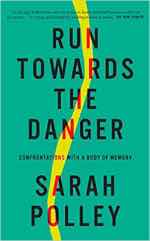
Polley’s memoir is Run Towards the Danger:
Amazon US
Amazon Canada
Amazon UK
Apple Books US
Apple Books Canada
Apple Books UK














That isn’t how Terry Gilliam treated young girls. That is how all kids were treated on movie sets in that era, nearly always with their parents’ consent (and often at their insistence in service of the money).
Wil Wheaton tells a story nearly as bad from the same era:
https://wilwheaton.net/2022/08/when-you-watch-the-curse-you-are-watching-two-children-who-were-abused-and-exploited-daily-during-production-no-adults-protected-us/
Another quite relevant: https://en.wikipedia.org/wiki/Twilight_Zone_accident
No one has said that Gilliam treated only girls poorly, nor has anyone suggested that the poor treatment of children on movie sets is unique to Gilliam.
I’m not sure what you are trying to convey with your comment.
It can be how kids were treated in general and also how Gilliam treated kids.The fact that other directors were similarly callous about the safety and well-being of child actors doesn’t let him off the hook for it.
Thank you for linking to this. I’ve been a fan of Polley’s for years, and reading this was really quite illuminating.