
I’m “biast” (con): nothing
(what is this about? see my critic’s minifesto)
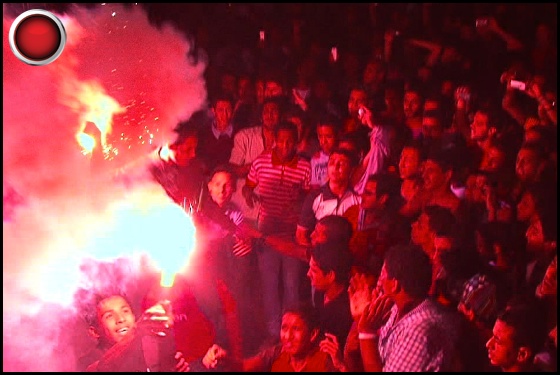
In the slums of Cairo, all the kids these days are into chaabi, a new form of Egyptian hip-hop-ish rap infused with traditional folk music. And by “kids,” of course, I mean boys and young men. And so does Electro Chaabi, from documentary filmmaker and French-Tunisian journalist Hind Meddeb, whom I am astonished to discover is female. In between footage of rave-like late-night street parties that lose their relatable familiarity the instant you realize there’s not a single girl or young woman bouncing up and down in time to the driving beat of the blaring music, Meddeb interviews performers, DJs, and fans, all of whom are male and all of whom are into chaabi because it offers “a breath of freedom for youths” and an opportunity to have their voices heard… oh, and it’s a challenge to religious and social norms, too. Just not to all of those norms, like the ones that keep girls and women separate and cloistered. None of these teen boys and young men appear to recognize the irony of a youth movement that offers nothing to half their generation, the one that has even greater cause to break out and demand their freedom. That’s hardly a surprise. But for Meddeb to ignore girls and women is confoundingly inexplicable. She doesn’t ask her interview subjects whether they think girls might like the music, or might want to come out and dance at a street party. She doesn’t ask the boys to explain their misogynist songs about harassing girls for fun, or about how all girls are spoiled brats. And though Meddeb offers us one brief shot of girls dancing (to some music that doesn’t sound quite like chaabi, actually), she doesn’t talk to one single girl or woman to ask her opinion of chaabi or whether anything about it represents freedom to her. For the chaabi guys to be so blinkered is understandable, if annoying. For Meddeb to be so blindered is inexcusable… and it means her film has little to offer Western audiences hoping for some insight into modern Egyptian culture.
viewed during the 57th BFI London Film Festival (note that, for some reason, all the printed and online LFF material refers to the film as ‘Electro Shaabi’)














She is, I guess, part of the culture too.
First of all Hind is a strong and self determined
woman who’s journalistic career is more than littered with the rights of
women and their struggle for freedom and the expression thereof within
the Arab and Muslim world. Secondly, as a male who contributed to the
production of this documentary in Cairo I can assure you that the
presence of women was never ignored or neglected, and that only our
permission to film was restricted by social and cultural acceptances and
the contributions therefore have been limited accordingly. Women
wrongfully do not share the same freedoms as men in Egyptian Culture and
interviews often, understandably, included the young males’ expression
of their disappointment regarding the restrictions imposed on their
interactions with females by out of date cultural norms still prevalent
in Egypt.