
Harrowing drama of modern-day piracy as a sort of illicit corporate takeover; riveting and exhausting.
I’m “biast” (pro): greatly enjoyed writer-director Tobias Lindholm’s The Hunt
I’m “biast” (con): nothing
(what is this about? see my critic’s minifesto)
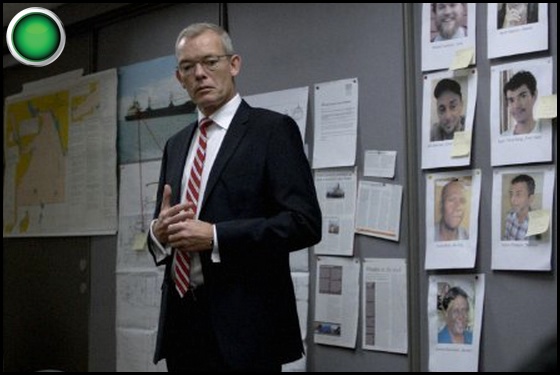
It plays more like a documentary, this fictional drama of modern-day piracy as a sort of illicit corporate takeover, but that doesn’t mean it isn’t both riveting and exhausting. A Danish cargo ship is captured by Somali pirates in the Indian Ocean, and you won’t believe how long the telephone negotiations to pay off the pirates and rescue the crew take — every delay is terrifying. Long quiet moments of uncertainty are punctuated by sudden sheer terror, a stark contrast matched by that between the sleek Copenhagen conference room and the squalid deteriorating conditions on the ship, the only locations here. Totally harrowing.




I’d be interested to put this up against Captain Phillips, which presumably has a much bigger budget, and see how they compare…
Jay Bahadur,wrote a book, The Pirates of Somalia: Inside Their Hidden World (2011). Hard to put down. He wrote an article for the Guardian a few years ago too. I would love to see a movie about the economic and political background that creates piracy in the first place, I think it is comparable to the background that created the “Golden Age” of Caribbean piracy that Hollywood loves to dramatize.
Anyway, after the Somali gov collapsed, and international community abandoned the people of Somalia, (save a few months of American attempts to bomb the place back into order), Japanese and European private companies raided the Somali coastline for resources and then started dumping their toxic waste off the coast; I think it is easy to see why the Somali ex-coastguard and groups of fishermen organized a bit to defend the coastline. I also see why they would then see the benefit to hijack a rich oil tanker. It certainly makes the Somali coastline seem more dangerous if they become famous for hijacking a rich and powerful boat. And then they also get paid, finally. Maybe they only get about 5 dollars an hour for fairly dangerous work, but if that’s your only option I guess you take it? And who pays? Insurance companies. And insurance payments are like one percent of overall revenues for these oil tankers, or something. It’s been a while since I read about it. But I have a hard time understanding what to expect from this movie.
I still haven’t seen “A Hijacking” and I rarely comment on a film I haven’t seen. But I have to know before watching this film, is it really just a plea for us to feel sorry for the lives of Danish men, because they are the real victims after all? Insurance companies typically just pay what the hijackers demand and raise their rates accordingly. What makes the situation in this movie different?