

I’m “biast” (con): nothing
(what is this about? see my critic’s minifesto)
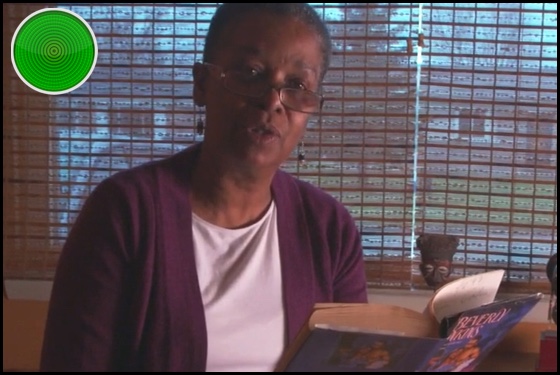
Everyone enjoys a happy ending, right? But isn’t it funny how no one complains that, say, every Arnold Schwarzenegger movie ends with him triumphing, and every crime novel ends with the mystery solved and the killer caught, yet the H.E.A.s — the “happily ever after”s — of romance fiction are looked down upon? Anyone who loves romance books already knows the snobbish disparaging the genre is subjected to, and those contrary examples — Arnie and mysteries — come straight from writers and readers in the delightful Love Between the Covers, the first feature from documentarian Laurie Kahn. These are women who are proud of the fiction they love and can defend it with infectious passion. Which they shouldn’t have to do, because, as is pointed out here, romance fiction is a multibillion-dollar concern with sales so huge that they basically prop up the entirety of publishing.
The sharp and affectionate Covers peeks inside the big, cozy community of writers and fans; many women are both at the same time; fan-favorite authors interviewed include Beverly Jenkins, Nora Roberts, Eloisa James, Radclyffe, and others. They mince no words in explaining why romance don’t get no respect, and why readers love it: the genre removes men from the center of attention, where they so often are in so-called “great literature,” and puts women’s desires — not only of the sexual and romantic variety, either — front and center. The generosity and “pay-it-forward attitude” of the industry makes new authors feel welcomed and encouraged, but it is the charms of the stories themselves that are so, well, seductive: readers find positive — and sex-positive — representations of women like themselves, even if they’re fat, even if they’re brown or black; whether they prefer heroines who are chaste Amish girls or lovestruck lesbians (and if there isn’t already a series about an Amish lesbian, there will be by tomorrow); whether they like stories set in the past, in the future, or in completely different dimensions entirely.
Covers is catnip for fans of the genre, of course, but it should also be observed with keen interest by anyone who wants to understand how incredibly friendly and supportive an industry driven by women, for women can be, how collaboration trumps competition. These smart, creative women will also likely be responsible for whatever the next innovations in publishing are; romance readers were early adopters of ebooks, and romance publishers all but invented modern self-publishing. Pay attention to what they are doing.
















I am so glad you like this doc. I saw it earlier this year and throughout I wondered how you’d feel about it. It truly took me into a world I didn’t know, made me appreciate it’s complexity, and I really came out appreciating the entrepreneurship of the authors. It was certainly an empowering doc.
What did you think I’d feel about it? :-)
I started reading romances at age 11, in 6th grade, when the teacher’s aide who was monitoring the cafeteria put down the Rosemary Rogers book she was reading next to me at the lunch table to do her rounds, and I picked it up and started reading it. Rogers was the epitome of the mid-’70s “bodice ripper” romance novelist, with rather risqué scenes of dominating men and feisty women in historical settings. My aunt then loaned me her collection of Harlequins and Barbara Cartland “sweet” romances, which was a big departure from the Rogers books.
I continued to read romances all the way until I stopped working at Barnes and Noble at age 45, and I still read a few select authors when they publish (Nora Roberts, but only her trilogy titles; Loretta Chase, who is one of the best historical romance novelists writing today; and Robin D. Owens, who is writing an ongoing SF romance series that I love for its rather unusual premise).
It’s illuminating how the two schools of genre fiction that are dominated by female writers, romance and fanfiction, are the two that are the most denigrated by mainstream opinion, isn’t it?
It’s not surprising in the least.