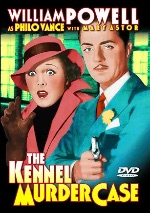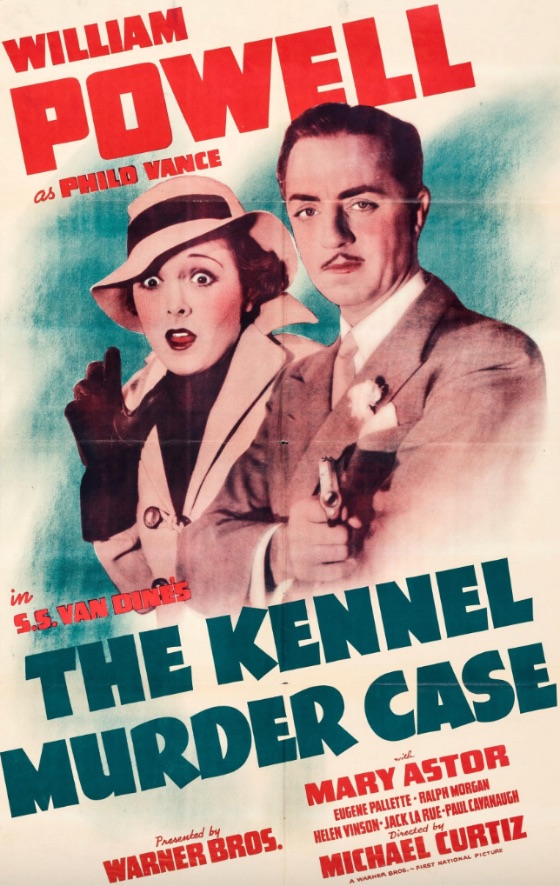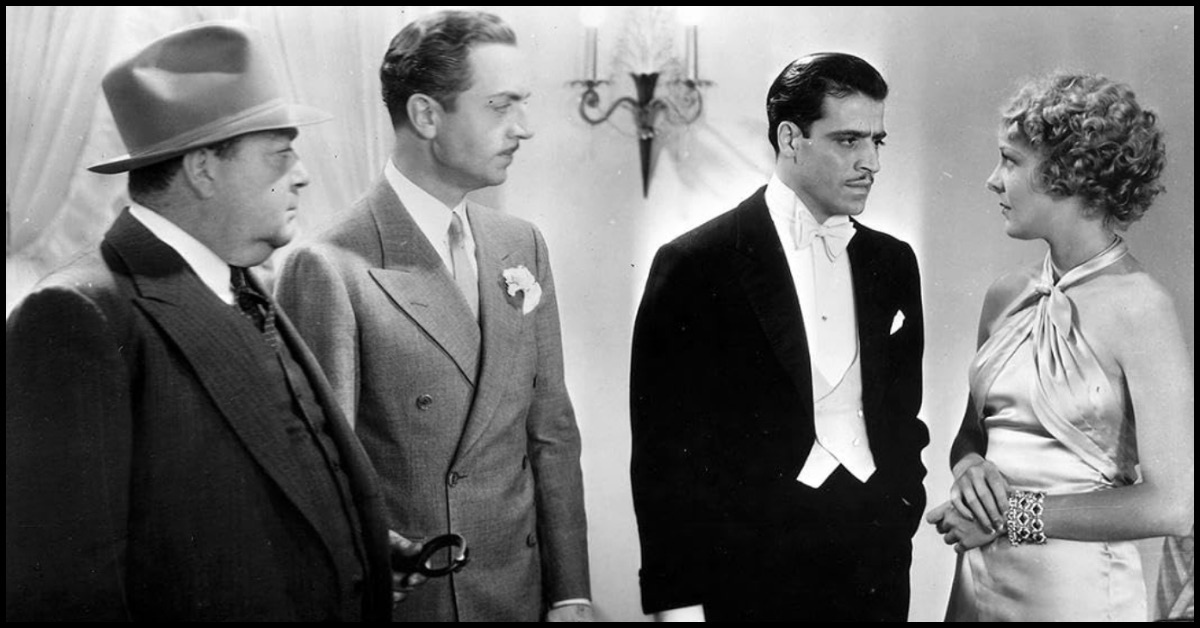
It’s so fluffly that a light breeze would spirit it away, but 1933’s The Kennel Murder Case is notable for a few delightful reasons. First, it was directed by Casablanca’s Michael Curtiz, a studio contract worker who cranked out a lot of classy stuff in an incredibly short period of time (100 films in 25 years!). And second, it stars a pre–Thin Man William Powell, and there’s simply no excuse to miss Powell in anything. Surely it was Powell’s cool comportment that inspired Jimmy Buffet to sing, “Oh I wish I had a pencil-thin mustache / Then I could solve some mysteries too.” And if you don’t want to solve some mysteries after watching Powell do it in style, you’ve got no right calling yourself a movie fan.
Here Powell is dashing and debonair detective Philo Vance, in a Depression-era New York City that will brook no mention of a life that’s less than comfortable and carefree. Carefree, of course, until a crime is committed. Genteel homicide stalks the Long Island Kennel Club as show dog Ghillie, a cute little Scottie, is killed just before the big dog show, and then millionaire (and suspected dog-murderer) Archer Coe (Robert Barrat) turns up dead… in a locked room! The flatfoots are quick to call it suicide, but when Vance hears the news, he’s on the case, murder being “far more interesting than a trip to Europe.” Was Coe’s death murder? Is the culprit Sir Thomas MacDonald (Paul Cavanagh), avenging his little Ghillie? Coe’s niece, Hilda (Mary Astor), whose love life took a serious crimp at Coe’s hand? The girlfriend (Helen Vinson) Coe terrorized? Vance’s nose for crime will ferret out the murderer, you can be sure.
This is a nice bit of fun for classic mystery buffs, full of wisecracking reporters, nervous butlers, priceless Chinese treasures, and lots of double-breasted suits and fedoras. And it’s a perfect example of the class-driven dynamic that fueled elegant detective stories from those of Sherlock Holmes to the cases of Nick and Nora Charles: the aristocratic, amateur private eye shows up the working-class, professional cops, solving the case while being gracious enough to let the police take all the credit. (Watch Vance order the district attorney and the coroner around, and have his commands accepted without question.) It’s crass and rather rude to be too rich these days, so these posh PIs have disappeared from our cinematic repertory. Too bad — they were awfully amusing.
This review originally appeared at the now-defunct Apollo Guide.