

I’m “biast” (con): …but not a fan of Shyamalan lately
(what is this about? see my critic’s minifesto)

What if superheroes *glances around conspiratorially* were real? Huh? What about it?
When M. Night Shymalan broached this matter almost 20 years ago with Unbreakable, it felt radical: he was taking matters of pulp fiction seriously. He was treating the idea of a superpowered crime-fighter not with cartoonish abandon but with dramatic gravitas. And it was mindblowing. Now, as he completes his what-if-superheroes-were-real trilogy — part two was 2017’s problematic Split — it’s as if those intervening two decades never happened. Not onscreen: his world has not moved on, and feels pretty static even as it’s supposedly mirroring a real world that has morphed almost beyond recognition since the 2000 of Unbreakable. And not offscreen: Shyamalan seems not to have noticed that The Movies have caught up with the whole taking-comic-books-seriously thing, and he’s still solemnly positing a notion that we’ve all long since agreed with and are already several steps ahead of him on.

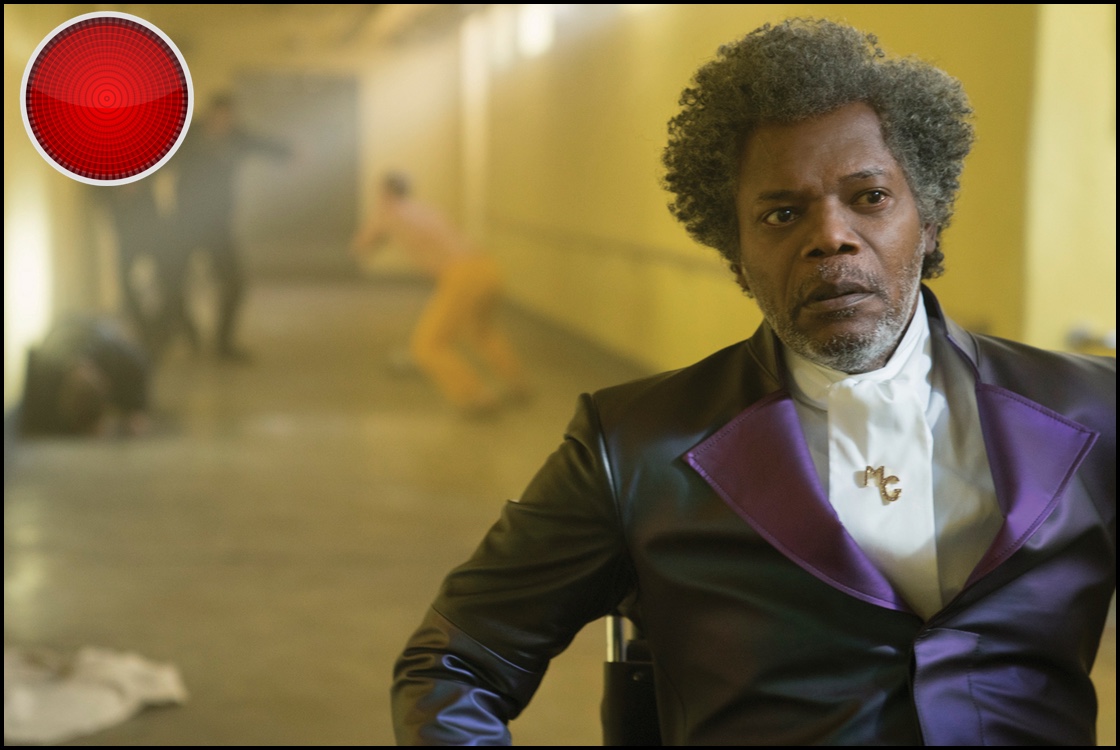
It’s sadly ironic that the earnest humorlessness of Glass throws into sharp relief the emotional and cultural vividness of the Marvel Cinematic Universe, which feels pretty real as it manages to grapple with weighty matters both political and personal — from mass surveillance to PTSD — without forgetting verve and wit. While the rest of us have been eagerly devouring stories about ethics and bigotry, nuances of good and evil, and the tragedy of metahumans and caped vigilantes, Glass is a ponderously zealous, faux-intellectual Comic Book Guy well-actually-ing us about shallow superhero tropes and clichés as if those are the most intriguing parts of these stories, instead of the junk to be waded through to get to the good stuff. Glass trots out some of those ridiculous tropes and clichés with glee, as if lazy storytelling conceits used by pulp-fiction writers would also exist in a “real” world in which metahumans actually existed. I wouldn’t want to spoil them, so I won’t describe them, but you won’t miss them when they happen, because genius comic-book geek Elijah Price (Samuel L. Jackson: The Hitman’s Bodyguard, Kong: Skull Island) — aka Mr Glass, thanks to his brittle-bone disease — will clearly enunciate them for anyone listening. (Unbreakable had already established Mr Glass as a brilliant villain, so we could call this “monologuing.”)
Contrived is the last thing a movie that wants to be taken as “realistic” should be, and yet there’s, well, not a bone in Glass that feels natural, authentic, or organic. The slim plot of the movie involves getting David Dunn (Bruce Willis: Rock the Kasbah, Sin City: A Dame to Kill For), the strong and invulnerable “good” vigilante of Unbreakable, and Kevin Wendell Crumb (James McAvoy: Sherlock Gnomes, Atomic Blonde), the man of dozens of fractured personalities including the “bad” Beast of Split, into the same psychiatric Philadelphia hospital where Glass has been kept for years. This is done under dubious legal strictures (which the film does not broach at all) and even more dubious medical ones by Dr. Ellie Staple (Sarah Paulson: Ocean’s Eight, The Post), who specializes in people who, as she says, suffer under the delusion that they are superheroes. Her treatment methods seem suspect, to say the least.

There’s not a lot more going on beyond that: this movie is an overlong first act, no middle act, and then a rushed and unconvincing finale, where Shyamalan (The Visit, The Last Airbender) really starts to pile on the nonsense. Getting things wrapped up here requires that security at this hospital be criminally terrible, that Glass’s genius verges on precognition — which is not supposed to be his power, and there’s no suggestion that it is — and that Staple’s expertise is both far deeper than we might expect yet also far more laughably lacking than it could thereby plausibly be: one late scene involves her learning something pretty basic about superhero stories by overhearing two kids talking in a comics store.
Glass is meant to be a rational, grounded alternative to “fantastical” comic-book movies. It feels instead like an accidental, unwitting satire of geek culture, and in particular of that very narrow slice of nerdery that takes great pains to overexplain its passions to the point where all the ineffable fun is sucked from it. This is not the kind of seriousness that superheroes need.
see also:
• Unbreakable (review)
• Split movie review: time for another round of “What the Hell Was M. Night Shyamalan Thinking?”
















Eagerly anticipated for years; sorely regretted mere minutes in. “Unbreakable” is one of the most soulful and bittersweet of character dramas. I seem to be one of the few individuals who suffers from crippling mental illness, who actually enjoyed “Split,” though I didn’t see the need for the trio of teenage girls to be half-stripped for much of the run time. “Glass,” however, lacked the subtlety of the first film and the wicked glee of the sequel, fixating on mini-sermons about our comic wooden idols and a complete absence of joy, save in McAvoy’s diabolical and disturbing turn as Kevin/Patricia/Hedwig/etcetera.
In all fairness, M. Night Shyamalan is hardly the first person to speculate about what would happen if superheroes were real. And though I was a bit amused to note how shamelessly he went about “borrowing” from Stephen King’s The Dead Zone in the latter part of Unbreakable, in the end I was more impressed with Alan Moore’s various works about the same subject.
That said, it’s hard to be optimistic about a sequel to a movie that came out such a long time ago. It’s not like Split got a lot of publicity.
I’m also surprised to see James McAvoy on the list of cast members. It seems like just yesterday that his role in X-Men: First Class had me convinced that he was the next Dave Tennant. Granted, nowadays even Dave Tennant isn’t that much of a Dave Tennant — which might explain his decision to star in the recent godawful thriller Bad Samaritan — but still…
I’ve read that last paragraph several times, and I still can’t figure out what it means. David Tennant works more steadily than almost any actor I can think of,* and most of his recent projects have been spectacular. As a geek and a children’s librarian, I particularly loved Jessica Jones and DuckTales, and I’m looking forward to Neil Gaiman’s Good Omens, but most of his overall track record so far is well above average, no matter how much you hate Bad Samaritan. Have I completely missed your point?
*Even James Cromwell may be getting nervous.
I guess I allowed my dislike of Bad Samaritan to overshadow the other roles of Mr. Tennant’s recent career. I’m sorry.
“In all fairness, M. Night Shyamalan is hardly the first person to speculate about what would happen if superheroes were real.”
That’s actually part of the problem – he seems to think he’s the first, when it’s actually very well-trodden ground. I think many of the weaknesses of his approach were covered over in Unbreakable by keeping the details mysterious, sticking to the distillation of superhero concept to its most essential elements, and his raw filmmaking talent.
Here, by necessity, he has to get more detailed and pull back the curtain more, thus exposing the trickery.
A big problem here is that what he’s doing is no longer a secret.
Who said he was? But with *Unbreakable* he was taking superheroes seriously at a time when Hollywood was not. He appears not to have noticed how cinema has moved on since then.
*Split* made $278 million globally. It cost $9 million to produce. I didn’t like that film and I didn’t want a sequel, but a sequel was certainly a smart business decision. And that is paying off: *Glass* made over $100 million globally over its first weekend; it cost $20 million to make.
Why? Actors gotta work. Same for David Tennant. (I’ve… never heard him called “Dave.”) He works. Both actors appear in shitty movies sometimes, but they also do smaller, more interesting (and probably more creatively satisfying work, too). I can forgive crap if it means good actors are using their big paychecks to subsidize smaller work.
All that said: McAvoy’s performance is about the only intriguing thing here (same for *Split*). He ain’t coasting here. It’s plain he’s putting his all into crafting many very distinct characters in one body.
Apparently my proofreader was asleep.
I love you, Tonio. I really do, but I just read your comment about mental illness, and I…don’t even know where to begin, so I’m going to respond to a more innocuous comment.
You know how live radio and TV shows have a five-second delay, in case someone says something really inappropriate? Maybe you could do the same sort of thing on these comment threads: type up your thoughts elsewhere, put the document aside, and wait a day or so before you post them here. While you’re waiting, you could ask yourself questions like:
•Is this factually correct?
•What sort of emotional response is this likely to provoke? Is it the response I intended?
•What assumptions sent me on this train of thought? Will the people reading this be making the same assumptions?
•Do the ideas in the train of thought flow logically from each other, and from the comment I’m responding to?
•Does this comment have anything to do with the topic?
I’ve posted all kinds of dumb things on the internet, and I’m sure I’ll post plenty more, but I have learned one thing: Not every thought needs to be shared with the world.
Okay. I get that.
For what it’s worth, I do believe that movies do have a great influence on how we feel or think about certain groups. So do TV shows.
Then again so do real-life experiences. So do real-life news events.
I sympathize with Aaron Snyder’s sentiment. But I think it’s unrealistic to think that movies like Glass are the only factors most people consider when they think about the mentally ill.
Of course, I could go on to say that some of the worst things I’ve heard about or seen were done by people who were allegedly sane. But that’s a topic for another day, if not a tangent.
But no one said that. No one said movies are the ONLY factor.
Will read your review later when I have time. For now I’m just happy that you didn’t like it. While I loved the idea of making a sequel out of two supposedly separate movies, I never saw the second movie this is a sequel of and never wanted to. Kinda bummed that such a great concept is wasted for me. (And I just thought Unbreakable was okay.)
The “twist” ending of *Split* — which is hardly a secret anymore — is that it was taking place in the same world as *Unbreakable.* I don’t want to sound as if I’m defending Shyamalan, but it’s not as if he’s doing anything unreasonable in having *Split* and *Unbreakable* meet here in *Glass.*
I don’t think it’s unreasonable. I think it’s a great idea! I just wish it had been done with two movies I’d wanted to see.
Movies like this are the reason why mental illnesses are feared and stigmatized in society. If you want an actual representation of Disassociate Identity Disorder, then read the psych thriller Working Title.
Riiight! It’s the movies.
And yet the first two things that happen every time there’s a mass shooting is the assurance that the suspect was obviously mentally ill and a demand that we do something about that.
You can’t have it both ways, people.
I realize that many mentally ill people are more a danger to themselves than to others. I also realize that not every mentally ill person falls into that category. A former co-worker who used to work at a mental hospital didn’t talk about how she was warned never to turn her back on a psychotic patient because of the movies. But if you care to believe otherwise, that’s up to you.
Just because that happens doesn’t mean it’s the right response. And often it’s completely not the case that mass-shooters are mentally ill. That’s what Aaron is saying: that we should not conflate violence with mental illness. Mentally ill people are far more likely to be the victims of violence than the perpetrators.
1 in 6 Americans live with a mental illness of some kind. That’s 54 million people. There have been 152 mass shootings between 1966 and 2018. Even being generous regarding the number of shooters involved in each incident that still comes out to much less than even one percent of the above population. How you personally feel about mental illness is up to you, but odds are you probably have friends and co-workers that fall into the definition of “Mentally Ill.”
It’s a shame about Split, really; until then audiences were dropping and I’d hoped M. Night might be shuffled off to a vaguely graceful retirement. But having women half-naked and imprisoned on screen made money (who could have guessed), so back he comes for a career renaissance, pumping out the same old garbage to a new generation.
And audiences are loving it. :-(
love almost all of your reviews, but this one is way off the mark. it’s the best origin trilogy ever. It’s also a redemption story. Did you ever read comic books? there are tropes. there are showdowns. When Mr. Glass’ mother says “I think he said it was referred to
as the “showdown”‘… it was hilarious. seriously funny. it went right past you. you have mistaken humor for well-actually-ing or man-splaining or whatever, and when you get the humor wrong, you get everything wrong. Audiences loved it because they understood the humor, and because it honors the comic book. It’s canon and it speaks to the heart of every comic book kid who feels weak and broken inside. And how do you gel your review of Chronicle with that of Shazam? an ”adolescent-male power fantasy”?? omfg. wow. yeah… it’s that. that’s what it IS. You liked Chronicle but the humorous version you hated. hmm. Had it been an adolescent Female power fantasy? not difficult to know how you would have reviewed that. differently. Your politics ruins many of your reviews. MeToo and Feminism is great but look at your own audience and the superhero audience a little closer. Adolescent male power fantasy is what put a 70 percent male audience in the first showing of Captain Marvel in my city. You are taking these politics too seriously- they will sort themselves out- but your reviews are forever. so… Chronicle was great… but then MeToo… so Shazam sucks? Some of your reviews for non-superpower movies are absolutely brilliant and eye-opening. Not this one. Please don’t ban me. I’m a fan of yours. i enjoy historical dramas more than superhero stuff actually. Looking forward to your Brightburn review. Somewhere in here there is some constructive criticism that will help you, whether i broke a ‘bingo’ or not.
It didn’t go past me. I just didn’t think it was clever or funny or interesting or enlightening.
They’re two different movies.
Yeah, the supposed all-male audience for superhero movies definitely needs more MeToo and Feminism.
This shit never sorts itself out. It takes people pushing back against it — for a really long time — to make any kind of headway against it, to enact any kind of change. You might be happy with the way the world is, but I am not, and I am not going to shut up about it. And I am not going to stop holding movies to account, because movies matter.
If you think I would ban you over this comment, you haven’t been paying attention.