
I’m “biast” (con): nothing
(what is this about? see my critic’s minifesto)

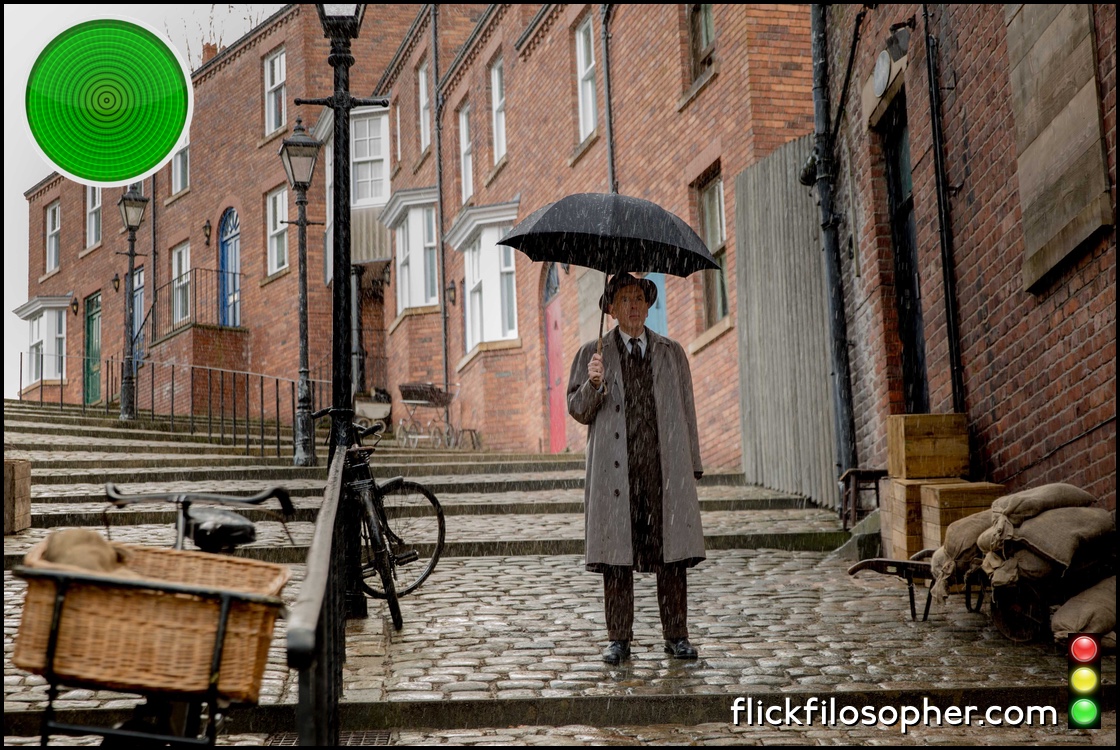
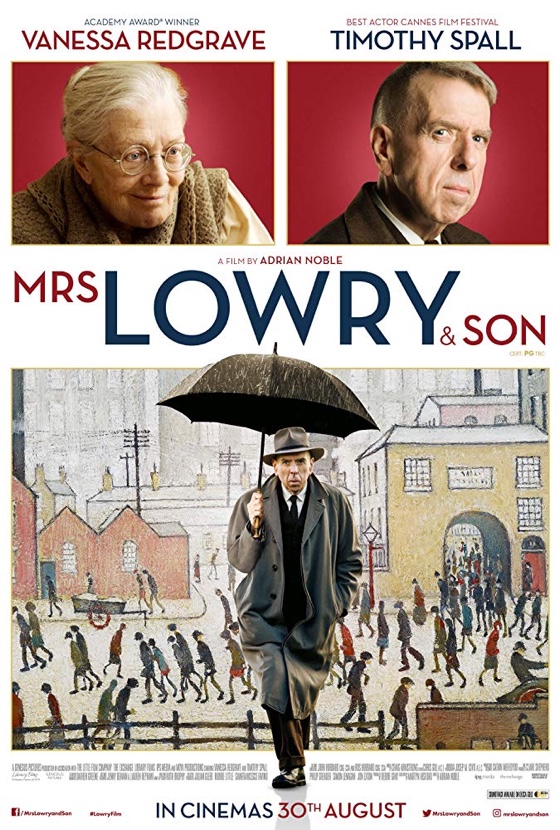
The mild tweeness with which Mrs Lowry & Son opens is a feint: this is not the comfortable costume-drama slice of domestic sentimentality it might at first appear to be. The potential for that would seem to have been real, even given the fraught relationship between British painter LS Lowry (Timothy Spall: Early Man, Finding Your Feet) and his mother, Elizabeth (Vanessa Redgrave: Foxcatcher, The Butler), with whom he lived for his entire life, until she died in 1939, when he was 52.

After all, the bedridden Elizabeth is merely amusingly, if exasperatingly, tetchy as we meet the odd pair: “I haven’t been cheerful since 1868,” she moans histrionically, as easygoing and remarkable toleration Laurie (as she calls him) tends to her every need and whim in their small house in 1930s Lancashire. Her passive-aggressive bitterness and her overt disappointment in her son initially take the shape of criticisms that, perhaps, an artist might at least accept as unintentional compliments. “You were born unworldly” is, to Elizabeth, a complaint — her son is so embarrassingly unconventional! — but Laurie seems to think that sounds pretty swell. As does the film, which occasionally dips a toe into the whimsically fantastical as a way to illustrate his dreamy mindscape.
But Lowry has deeper tributes to offer a painter who is today beloved in Britain for his scenes of ordinary working life in the industrial north of England, but who then was mired in an almighty struggle to be seen and understood. (There’s an appealing, and very modern, graphic-design quality to his work that doesn’t seem to have been appreciated at that moment, though in retrospect, it’s not wildly unlike that of other painters working at the time. His choice of subject matter wasn’t always considered appropriate, either, apparently.) Elizabeth’s vile, explicitly expressed cruelty toward her son — that he’s useless, untalented, and wasting his time with his “hobby” — very much mirrors the internal dialog that many a creative person will recognize, the anxiety and the self-doubt that nags and hounds. As Laurie’s gentle protestations to his mother reflect an artist’s internal defense: “I’m not fit for anything else,” he reflects, in a way that is at once affable and cutting. Not many movies about artists manage to hone in on a universality of the creative psyche — about how creativity can be crushed, from outside and from within — nor manage to do so with such clear compassion.

There are deeper darknesses that screenwriter Martyn Hesford, working from his stage play, and director Adrian Noble want to explore, too, particularly in Elizabeth’s horrid toxicity. She is a smallminded conformist easily swayed by what others think, and a bigot mortified to find herself forced by her dead husband’s profligacy — he left them with enormous debts and in reduced circumstances — to live among the very sort of ordinary working people that Laurie’s paintings celebrate. (He works as a rent collector, and he would appear to have been the kindest soul ever to do such a job.) The film doesn’t excuse her — Redgrave’s performance is surely destined to be seen as one of the wonderful, awful depictions of twisted motherhood — but it does slyly ask us to consider how the world thwarts women’s own creative ambitions — young Elizabeth had once been working toward a career as a concert pianist, a dream curtailed by motherhood — even more effectively than it does those of men.
But this is most certainly Laurie’s story, and just when we are starting to marvel at his long-suffering patience, Spall — whose performance is more wily than it at first seems — lets those deep waters roil with resentment and anger… before he settles back into Laurie’s placid endurance. It’s a paean to artistic stick-to-it-iveness that is heartening and as unexpectedly cheerful as Elizabeth was not.
















Thank you very much for your review.
I gave that movie 5 stars in a Google review.
You really summed it up very neatly.
I enjoyed reading your review.
I hope to be financially well off enough to support you in some undisclosed future.
I didn’t realise this film had been made, though so knew about the play. I am very grateful to you for bringing it to my attention. I have loved Lowry’s paintings since I first saw them as a teenager. I have three prints on the wall here! I love the review – you get to the essence with great compassion and economy. So many people have had the same battle as Lowry! Didn’t know his mother had artistic talent. She seems to have taken her own bitterness out on her son. A bit like someone who has been the victim of violence from a parent becoming violent to their own children! Thanks again.