

I’m “biast” (con): nothing
(what is this about? see my critic’s minifesto)
I’m skinny but I’m strong. I can read a little and I like to sing.” So does James Brown describe himself as a young man, just out of prison and ready to get on with his life. His cruelly long sentence for a petty nonviolent crime, of course, is but one racially charged injustice a black man would face in mid-20th-century America. Director Tate Taylor (The Help) — and screenwriters Jez Butterworth and John-Henry Butterworth (Edge of Tomorrow) and Steven Baigelman — avoids turning this solid, sympathetic biopic of the godfather of funk and soul into a sermon on racism, instead homing in with a laser focus on a few moments in Brown’s life that underscore how pervasive bigotry infected his life. In one terrible scene that is over before it strikes you just how deeply terrible it is, we see the casual nonchalance with which little-boy Brown (Jamarion and Jordan Scott) confronts the reality of lynching in Depression-era Georgia. In another electrifying scene, the now-famous performer Brown (Chadwick Boseman, in a stunning breakout performance), copes with the tense atmosphere of the late 60s, just after the assassination of Martin Luther King Jr., when one of his concerts threatens to turn into a riot, mostly thanks to the presence of overzealous and fearful cops.
On the whole, however, this feels like every other biopic you’ve ever seen. Taylor and team try for something fresh in Boseman’s occasional takes directly into the camera, as if his Brown knows we’re watching and judging… for he is, unsurprisingly, often a problematic genius, as apparently prone to abusing women as he is to inventing clever new ways of promoting himself and inspired new ways of breaking the “rules” of musicality to wonderful effect. But whatever Tate was aiming for with this tactic isn’t clear. Still, the cast is fantastic, also featuring the always marvelous Viola Davis (Ender’s Game) and Lennie James (Colombiana) as Brown’s violently passionate parents; Nelsan Ellis (The Butler) as Brown’s best friend and musical partner; the goddess Octavia Spencer (Snowpiercer) as young Brown’s aunt; and Dan Aykroyd (Tammy) as the manager who cheerfully accedes to Brown’s radical ideas about the business side of things. And the music, naturally, is fantastic.


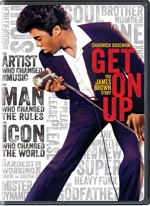
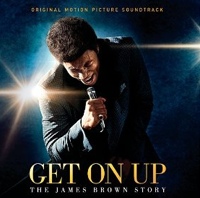














A lot of biopics these days seem to tend towards the anodyne. I wonder if it’s a side-effect of needing permission from the estates to get at primary sources.
When I first saw the movie What’s Love Got to Do with It?, I found it sadly amusing how much they played down the influence of racism in the life of Tina Turner as if the average moviegoer was supposed to believe that it was possible for a black woman in 1960s America to go through life without meeting one white person who was mean to her.
However, I did not realize how ridiculous that assumption was until I started adding up the number of white women I have known who have been beaten by white men (either husbands, boyfriends or whatever) — and found that number to be depressingly high. (And I’m an introvert. Just imagine how many women in that category a more outgoing person would know.)
Yes, I realize that even the best movie in the world can’t cover every pov in view in the space of two hours but there seemed to be something obscene with the way the script seemed to imply that white men — as opposed to non-white men — were above that type of thing. As if it somehow improves the problem of domestic violence if we can “prove” that it’s their problem and not our problem.
Then again I guess I’m biast because one of those women I mentioned above was not only my best friend but a woman who later on saved my life.
I usually try to separate art from the artist but, after reading Yamma Brown’s (James Brown’s daughter) story about how he would savagely beat her mother and how that led to having multiple relationships with abusive men, I no longer have an interest in the man’s music.