

I’m “biast” (con): literally nothing
(what is this about? see my critic’s minifesto)

Come on, admit it: The categories where you get stumped while filling out your annual Oscar picks for the office or party pool are Sound Editing and Sound Mixing. Even really serious cinephiles can find themselves asking: What are these crafts, even, and what’s the difference between them?
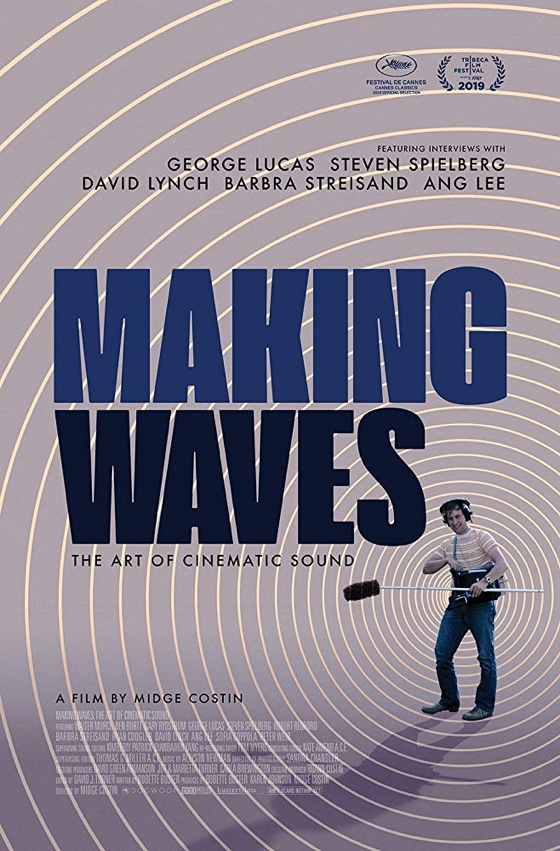
Now, it’s true that the stunning and surprising new documentary Making Waves: The Art of Cinematic Sound — from Midge Costin, a veteran sound editor making her directorial debut — is not here specifically to help you win your Oscar pool. It’s merely an excellent bonus that after this wonderfully enlightening and entertaining overview of the history of sound in film, you will have also gotten a terrific, if perhaps accidental, primer on the difference between sound editing and sound mixing (as well as nearly everything else to do with movie sound).
What a movie sounds like and how that enriches our enjoyment of it may not be anything you’ve ever considered before; after all, we talking about seeing a film, not hearing it (as someone notes here). But that will all change after you listen to masters of cinematic sound discuss how “sound is half the experience” and the “subliminal” impact it can have, and after you witness the evolution of how sound makes our encounters with cinema more seductive.
The timeline that Costin and her experts lay before us is a litany of classic movies that take on newly thrilling meaning when you pay attention to how they fall on our ears. (Clips galore here! You will want to go watch all these movies again — or for the first time — after.) Sure, everything changed with 1927’s The Jazz Singer and its pioneering synchronized dialogue. But that was nothing to how everything changed again with the introduction of intentionally designed sound effects for 1933’s King Kong… and again with the rich invented-yet-realistic soundscapes of 1977’s Star Wars… and again with the immersive surround sound of 1979’s Apocalypse Now… and again…
The lords of movie sound are teaching this masterclass: Walter Murch (who won his first Oscar for his sound work on Apocalypse Now), Star Wars legend Ben Burtt, and others. You’ll discover how the Beatles(!) affected movie sound. The innovations that Orson Welles and Alfred Hitchcock brought to the craft. Why 1976’s A Star Is Born was so groundbreaking. And so much more.
Behind-the-scenes movie stuff doesn’t get much wonkier than this. But Making Waves is not overly technical. It’s simply delightfully eager to help you understand a woefully underappreciated aspect of the filmmaking art… and even if you are not deeply engaged in the practical side of filmmaking, it will bring a whole new level of appreciation to your movie viewing. If you love movies, love how they transport you, and want to understand better how they do their magic on you, do not miss this one.
















This looks great
Thanks for drawing it to our attention
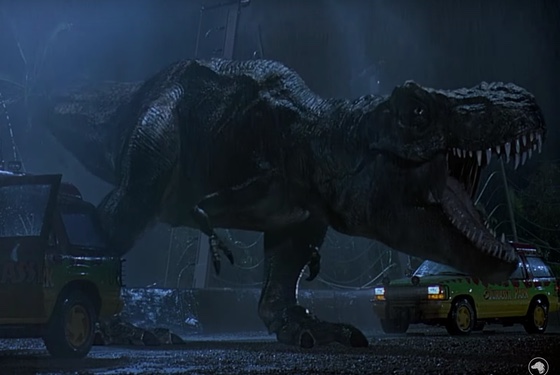
last year (?) i saw the re-release in the movie theatres of Close Encounters…fhe film was cleaned up a bit and it is still glorious to look at (an amazing piece of film) but i was really hoping that the sound would have been remastered in some way to make the musical notes in that amazing scene where the communication from the space ship blows out all the windows and nearly breaks ear drums of the scientists and witnesses … well, feel like it would blow out all the speakers in the movie theatres… it didn’t. matter of fact, the sound was a *little* bit fuzzy in parts. i think the first movie where the sound made me sit up and take real notice was actually Jurassic Park, where the bellow of the TREX made the audience put their hands over their ears…
It’s often surprising watching pre-1980’s films at the cinema, as they don’t have the multi-track digital audio we’re all accustomed to now. Only certain titles receive the special full remixing enabling a modern, more enveloping – and loud – sound experience. I saw 2001: A Space Odyssey a few years ago and ears bled. Been watching more Indian films lately and the sound in most films was very poor up until the 2000’s, with music and vocals still having a very tinny low-fidelity quality. Now though, all Indian films, like the epic Bahubali, are pretty on par with Hollywood for sonic assaults.
The first time I really noticed sound in the theatre was when the THX logo theme first appeared before a film. I was about eight or nine and it felt so loud I thought I was about to explode. Such is the memory of it anyway. Another locked-in memory is the opening of Star Trek Generations, when the wine bottle smashes on the Enterprise in the opening credits. Watching that film at home I still prepare for how loud I expect that moment to be, only to be disappointed when it doesn’t match the pummeling noise I remember from 1994.