

With her second feature, Anna Kerrigan completely upends the western with a thoroughly modern take on the notion of lighting out into the wilderness in order to find the freedom to find yourself. Everything about the foundations of the genre is challenged in Cowboys — the title is both ironic and transformative — from what constitutes true freedom to how it is not, in fact, found in solitude.
Troy (Steve Zahn: War for the Planet of the Apes, The Good Dinosaur) is a man with his own issues fitting in: his mental health is rocky, which manifests, in part, in impulse control issues. Which is perhaps a contributing factor in his decision to “kidnap” his 10-year-old son, Joe (newcomer Sasha Knight), and head into the mountains and forest outside their small Montana town, aiming for the Canadian border and, presumably, a new life for both of them.
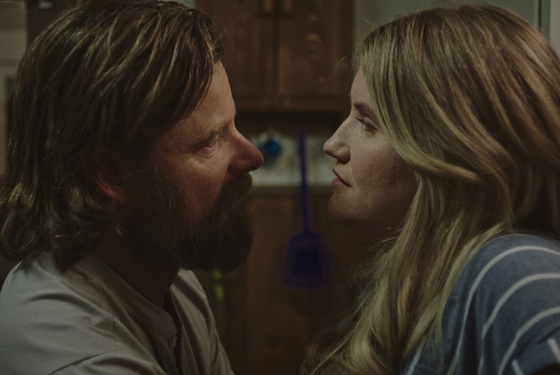
This adventure feels necessary to both father and son because Sally (Jillian Bell: Bill & Ted Face the Music, Office Christmas Party) — Joe’s mom and Troy’s wife, from whom he is separated — cannot accept that Joe is trans, and refuses to let go of the girly daughter she loves to dress up like a doll. “Manly” yet sensitive and accepting dad bumping up against feminist but not openminded enough mom creates a hugely provocative dare to gender expectations, as if to say that even progressive 21st-century norms still have a long way to go. “Who would choose to be a girl?” Sally wonders at one point, her despair that of a woman in a sexist world as much as it is meant to be a repudiation of Joe’s reality, but her misapprehension underscores the point: Joe is not “choosing” his gender. His gender merely is what it is.
Kerrigan, who is cis, consulted with trans people — and in particular with trans people who grew up in conservative rural communities — to weave a beautiful portrait of a child braver than many of us can imagine. Knight’s subtly powerful performance comes from experience: he is trans himself. And remarkably nuanced and wonderfully engaging turns from Zahn and Bell capture their emotional discombobulation as their work as parents has split wide open into new realms that their child needs support and understanding to navigate.
Kerrigan’s deep compassion extends to the unusual female gaze that she brings to Cowboys: this is not a movie about wide open spaces but close-in intimacy, and how we learn from what we see in the people around us. Her camera looks upon men here — sometimes just random men, in passing — in a way that isn’t sexual but, through Joe’s eyes, aspirational. This is not a particularly trans way to see the world: cis children also look to adults to understand what it means to be a man or a woman. It’s another way in which Kerrigan uses ideas that we are all familiar with to ask us to reexamine not only our preconceptions about what it means to be trans but the baggage all of us, cis and trans alike, bring to gendered expectations in the first place.
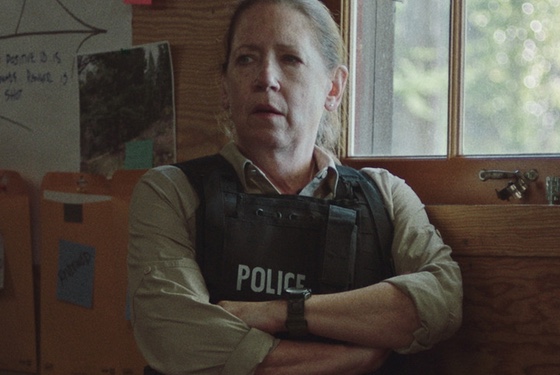
More expectations turned upside down: Cowboys even features a cop (the always amazing Ann Dowd: A Kid Like Jake, Hereditary), on the search for Joe once Sally reports the kidnapping, who doesn’t need a gun to be very effective at her job. Kerrigan draws a specific contrast between officer Faith and her trigger-happy colleagues in a way that feels like a specific rebuke not only to movie cops but real-life ones.
Cowboys is an astonishing and very necessary film for this moment right now, when possibilities for big societal change seem within reach, if only we can imagine them. And it turns out that some of them don’t require much of a leap of imagination at all.
Cowboys was the Alliance of Women Film Journalists’ Movie of the Week for February 12th. Read the comments from AWFJ members — including me — on why the film deserves this honor.

















I saw the trailer for this a few weeks ago. Looked good, so, I’m very glad to read this review.