

I’m “biast” (con): nothing
(what is this about? see my critic’s minifesto)

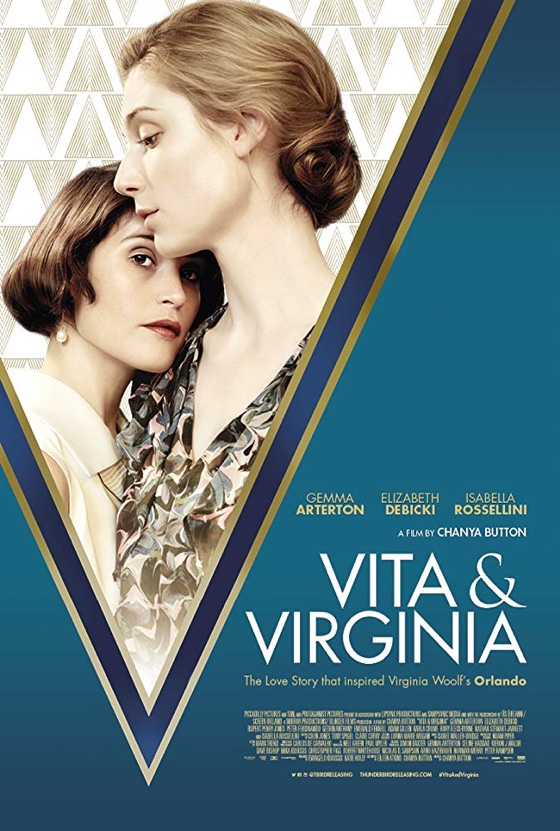
A movie about the legendary literary lesbian* romance that directly inspired the creation of one of the great works of fiction, starring the absolutely incendiary duo of Gemma Arterton and Elizabeth Debicki? It’s criminal that Vita & Virginia is this dull. This blah. This, somehow, stodgy. There’s no passion to be found here: not sexual, not intellectual. (It’s arguable which is worse, but given how little screen time throughout history intellectual women have gotten, I’ll go with the latter.) How does this happen?
It’s 1920s London. (OMG the clothes.) Aristocrat and popular novelist Vita Sackville-West (Arterton: Their Finest, The Girl with All the Gifts) is a “promiscuous exhibitionist,” her disdainful mother (Isabella Rossellini: Joy, Enemy) snipes. Vita’s husband, diplomat Harold Nicolson (Rupert Penry-Jones [A Little Chaos, Charlotte Gray], sporting impressive historical facial hair), decries the “sapphic pageant” that is her life, as she engages in an endless array of dalliances with women. (They have a quietly open marriage, and he has dalliances with men. But he is a typical male hypocrite.) If only the depiction of Vita’s pursuit of fellow writer Virginia Woolf (Debicki: Widows, Peter Rabbit) — a woman of a far more bohemian bent and beneath her, socially — exuded the deliciously sordid energy that her detractors speak of!

Based on a 1992 play by actor Eileen Atkins, and adapted with Atkins by British director Chanya Button for her second feature, Vita & Virginia features a lot of talk about Vita’s ardor and fieriness, a contrast to the subdued rationalism of Virginia, but we never feel it. Not even when the ups-and-downs of these two fire-and-ice women upend Virginia’s mental state, which is precarious to begin with. Wolff may have been bipolar; her breakdown here, when it comes, involves her being unable to find the ordinary words to express what she is trying to say, which may have been accurate as far as how her mental distress manifested, but my first thought was that she was having a stroke, which is a completely different sort of physical affliction from bipolar disorders. Whatever diagnosis might be made today, she was psychologically precarious, as we see here, though only via a kind of stiff-upper-lip–colored glasses.
But it seems that Vita’s spirit — which, I stress with utmost disappointment, is more spoken of than shown — inspires Virginia to write Orlando, her famous fantasy about a 15th-century gentleman who changes gender and becomes a woman. It would be legit amazing and inspiring and powerful if Vita & Virginia could have managed to capture the sense of a person who embodies masculine and feminine energy in equal measure, a person who is human first, before any notion of male/female/other/none comes into it.
This movie does not manage that.

Instead, it feels as if Arterton and Debicki have been instructed to tamp down any embarrassingly unBritish emotion, any distressing fleshly vitality, any suggestion that these women authentically transcended the cultural boxes into which they’d been shoved, rather than merely feebly struggling against them. Perhaps this is intentional and overt, meant to, I dunno, keep the film somehow “accessible” and mainstream. (How dare we suggest that women — and men! — are not their gender!) Perhaps this is what happens when even female filmmakers have internalized the notion that strong passion from women is unseemly unless it involves husbands or children. (Virginia is childless, but is married, to Leonard Wolff [Peter Ferdinando: King Arthur: Legend of the Sword, Ghost in the Shell], who seems more business partner than life partner.) A sidebar character, Virginia’s sister, painter Vanessa Bell (Emerald Fennell: Pan, The Danish Girl), is way more engagingly weird and vibrant. I’d love to see a movie about her.
In any event, it doesn’t feel right that this story should be told in a way that is suitable for tweens, as its British rating of 12A suggests. I suspect a rather demure scene of fully clothed female sexual pleasure will earn the film an R rating for its US release in August. Because women having orgasms without men, or at all? Horrors!
I wish this movie didn’t accidentally embrace such regressive attitudes about women, sex, independence, and who deserves personhood. But it kinda does.
*‘legendary literary lesbian’: say that three times fast
Vita & Virginia is the Alliance of Women Film Journalists’ Movie of the Week for August 30th. I could not endorse it, but for a counterpoint to my review, read the comments from other AWFJ members on why the film deserves this honor.















There’s something about British period pieces (particularly Victorian or Edwardian era movies) that make filmmakers afraid of putting any energy or humor into them.
Reading your review, my mind wandered and made absurd connections, and I now want to see Vita and Virginia and Bertram, in which Bertie Wooster somehow inserts himself into the proceedings, with these actors. That would liven things up!
And now I actually kinda do want to read a Jeeves and Wooster story where good-natured Bertie has some lesbian chums.
Have you already seen The Favourite? It’s chock full of lesbians, energy, and laughs aplenty. I was hoping its success would usher in a wave of satirical period pieces, but no such luck. Speaking of humor, I just noticed that the real life Sackvilie-West was a dead ringer for Oscar Wilde… their hairdos in particular are strikingly similar.
When it comes to literary crossovers, I don’t mean to one-up you old chap, but I kind of want to read a Jeeves and Wooster story where Jeeves and Wooster are the lesbian chums. I was thinking maybe this movie would scratch that itch – a shame it came out so stodgy and subdued. Cool to hear Vanessa Bell got some screen time though.
I wanted to see the Favourite in the theater, but didn’t manage to catch it. Thanks for the reminder.
Agh! The Favourite. Must see that at once.
This is 1920s, though. It was arguably a time full of humor and fun.
I’m pretty sure he did, and just didn’t realize it. :-)
in the Jeeves & Wooster series with Laurie and Fry, i’m pretty sure there were some “spiffing, sporting” women with lesbian tendencies implied.
Honoria Glosso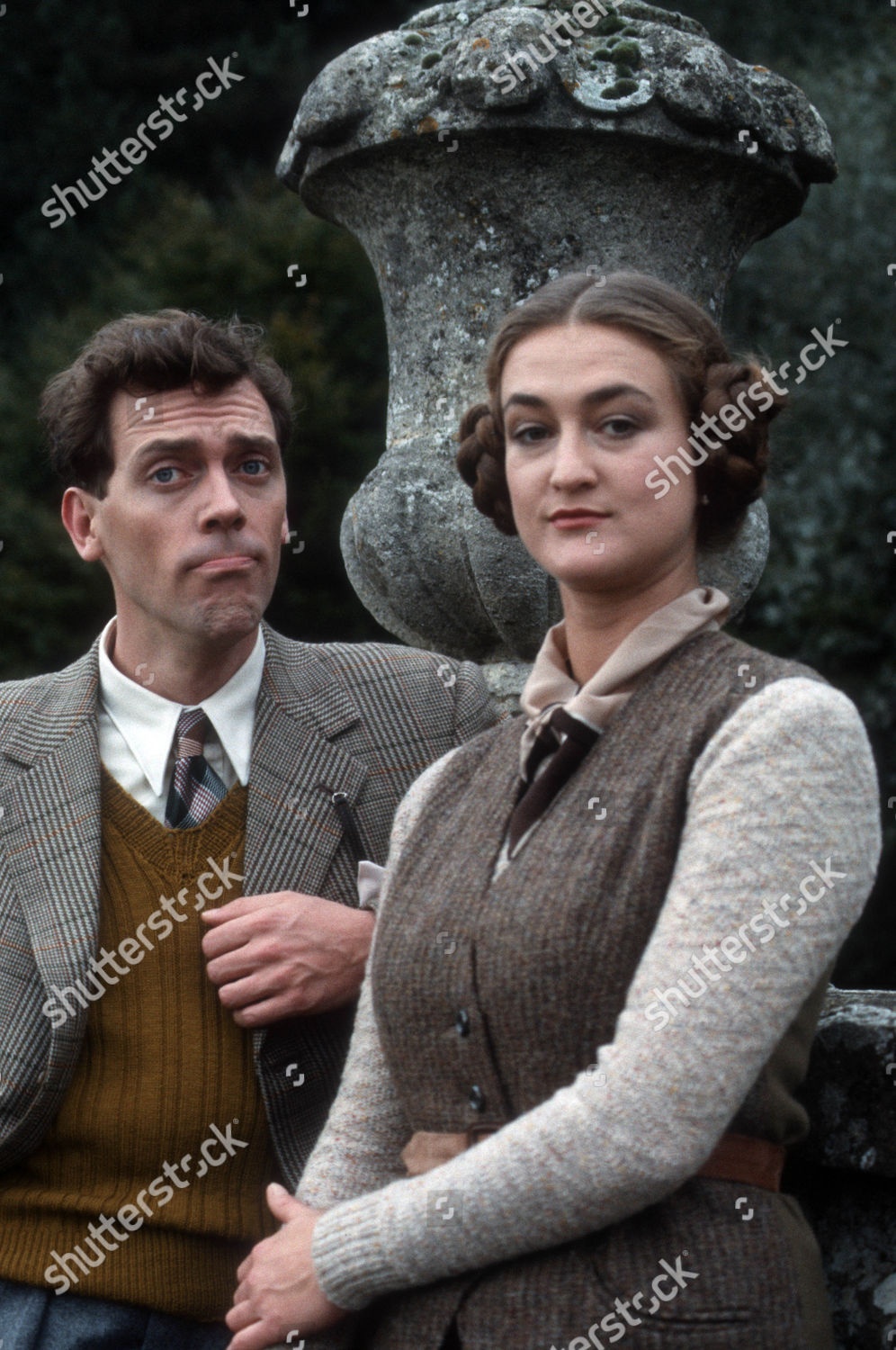 p.
p.
I was actually thinking of Bobbie Wickham. Though she was often (like pretty much every young unmarried woman in the stories) portrayed as seeking marriage, I could see her just looking for someone whose social companionship she could enjoy while looking elsewhere for love.
And of all the women threatening Bertie with the horrific prospect of matrimony, I could actually see it working out between those two. (Bertie plausibly being what we’d call asexual in modern parlance.)
Now I want to see someone add the words “model of a modern” to those words and come up with the most unique version of a Gilbert and Sullivan song to ever be created in this century…
I am a living legendary literary lesbian,
With similes Dickensian and metaphors Orwelian,
I roamed the roaring twenties and romanced ladies rhetorical,
From Woolfe and Stein to Djuna Barnes, both Vivien and Yoshiya.
I’m very educated too on contraptions mechanical,
And frequently fetch flannel with an appetite tyrannical;
About the Women’s NBA I’m teeming with a ton of news,
I own two Jeeps, an SUV, and several pairs of softball shoes.
I’ve written sapphic poetry and painted Cannas blossoming;
My spicy stand up comedy has all the tabloids gossiping,
In every matter mental, private, public, and professional,
I am the very model of a female homosexual.
Cool!
Bloody marvelous.
Bravo!
I am the very legendary literary lesbian,
In works that run the gamut from the four-star to pedestrian,
I have to end this now even though I’m quite the thespian,
Because no one has invented stuff to rhyme with the word “lesbian.”
LOL!
Perhaps instead of seeing this, one should simply revisit Sally Potter’s humourous, energetic and passionate 1992 film of Orlando? I want nothing more than more lesbian movies, but they have to also be good movies. I honestly would rather a Jean Rollin lesbian vampire film, or John Waters’ Desperate Living, than a squeaky clean lifeless period drama like this.
Paucity of guts in recent period movies compels me to run far away from most of them. Watching a 1986 BBC TV adaptation of Austen’s Northanger Abbey I was mesmerised at how cinematically alive it felt, with frequent whimsical melodramatic flourishes, the kind that are meticulously removed from modern versions, lest they contain a trace of anything vivacious and, dare I say, entertaining. As Catherine Morland, perky ingenue Katherine Schlesinger stares at passing lads with a lustful but innocent intensity that makes today’s efforts look icily sodden. Plenty of “fleshy vitality” there. Maybe my heart is simply stuck in the past, clinging to abandoned aesthetic choices that continue to speak my language, while today’s media morass so often resists translation.
Yup.