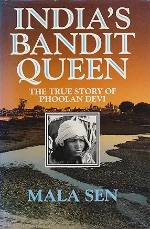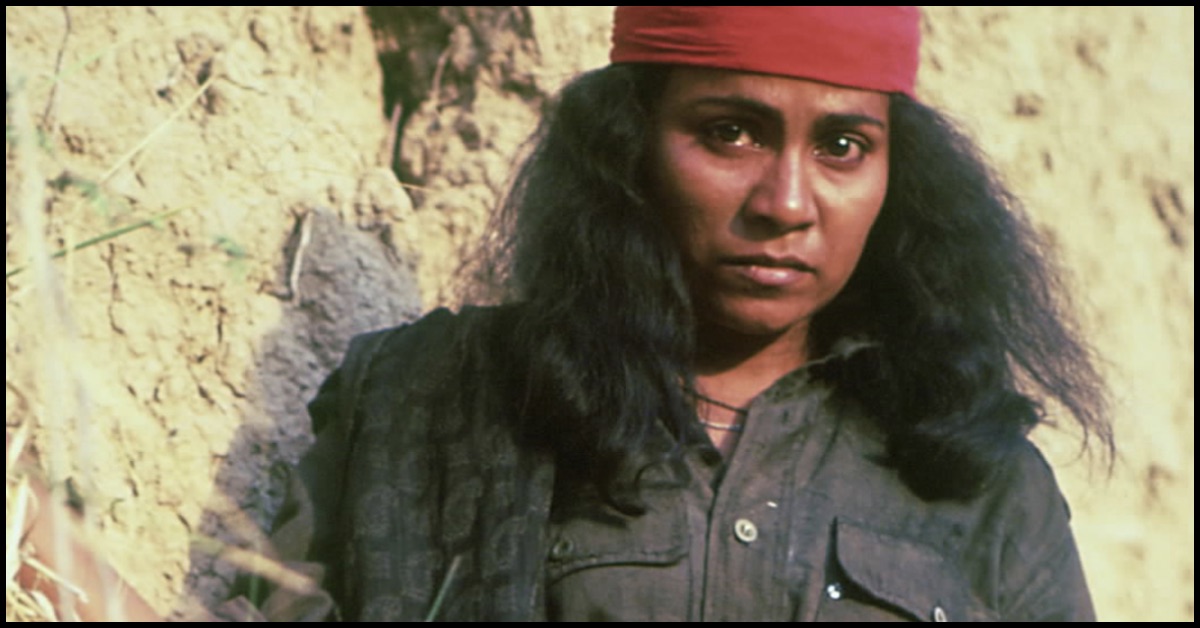
Phoolan Devi is a modern-day Robin Hood, a heroine to the lower castes of India, a “goddess” to the people who love her. This true story, based on screenwriter Mala Sen’s biography and Devi’s own diaries, is a powerful — in spots devastating — journey through one woman’s conquest of a culture that views women as little more than sexual commodities, and low castes as less than human.
As an 11-year-old child in 1968, Phoolan (Sunita Bhatt) — “no beauty” according to her father, who sees girl children as “a curse” — is sold to Puttilal (Aditya Srivastava) for a rusty bicycle and a mangy cow, to be his wife. A veritable servant to this middle-aged man and his mother, Phoolan perseveres until Puttilal pathetically attempts to seduce her… and can manage only to rape her. Running away to her distant home, Phoolan grows into a young woman (now played by the marvelous — and beautiful — Seema Biswas) constantly at odds with the expectations of her gender and her caste. In a culture in which the rape and beating of women is par for the course, her resistance to abuse results in her banishment from her village. Her uncle is relatively kind, takes her in, and inadvertently introduces her to a low-caste gang of bandits led by Vikram Mallah (Nirmal Pandey).
And therein lies the sad irony of Bandit Queen: worthy only of subjugation by legitimate society, Phoolan is able to come fully into her own, to act as a self-determining human being, and to express her rage at her world only when she becomes an outlaw. With the bandits, Phoolan at last finds a place where she is not only accepted as a person with basic rights but a woman for whom men will risk their lives. Initially, she must be held under the protection of Vikram, who is slightly less barbaric and slightly more enlightened than his fellows — part of the pleasure of Bandit Queen is watching Phoolan grow into the self-assured boss she becomes, leading her men in robbing, kidnapping, and murdering rich members of higher castes.
Despite the joy of witnessing the triumph of a downtrodden character, this isn’t a particularly pleasant film. But it is one well worth the time of fans of serious drama. It’s not only the physical setting — India’s state of Uttar Pradesh — that is harsh and desolate. Vindication for the crimes of the bandits falls hardest on Phoolan, of course, for breaking not just laws inscribed in legal codes but also unspoken rules about the behaviour of low-caste women. The ritual, public humiliation Phoolan endures is sickening, and, as it is echoed later in the plight of a toddler girl abandoned as unworthy of rescue from danger, reminds us that Phoolan’s ultimate victory aside, not much has improved for the lives of Indian girls and women in the aftermath of her struggle.
This review originally appeared at the now-defunct Apollo Guide.