A thing that makes writer-director Jane Schoenbrun unique among filmmakers working today is this: They understand fandom in an emotionally profound way that, I think, will be identifiable — maybe uncomfortably so — to many who consider themselves geeky lovers of pop culture. Because Schoenbrun’s understanding extends to the fannish impulse to take it all way too damn far. Like when a racist, misogynist subset of Star Wars fans was apparently compelled to protest the casting, in the 2010s sequel trilogy, of nonmale and nonwhite actors, to the point of engaging in a campaign of online abuse against those actors, driving some of them off social media. (Taking it to extremes isn’t always bad. This same drive has been inspiring Trekkies to fill the ranks of NASA and other aerospace endeavors for the past half century.)
But the thing that makes Schoenbrun’s work so electrifying is the surreal gusto with which they plummet into, through, and beyond the intense, earnest relationships we can have with pop culture. Teenage Sex and Death at Camp Miasma is a blood-gushing, cheerfully horny phantasmagorical black comedy that trips back and forth between sex and death, between fantasy and reality, from reel to real and back again… and it’s also deeply sincere in its heart-on-its-sleeve sentiment. Schoenbrun, who wrote the script as well as directs, has an absolute blast bouncing from almost comical literalism — the thematic convention that ties sex to death in teen horror movies is stamped right into the title, after all — to celebratory displays of cinematic fakery — obvious matte paintings stand in for real outdoors locations — to nightmarish visions of squishy, fragile human bodies and outrageous gore that reference everything from Lovecraft to David Lynch.
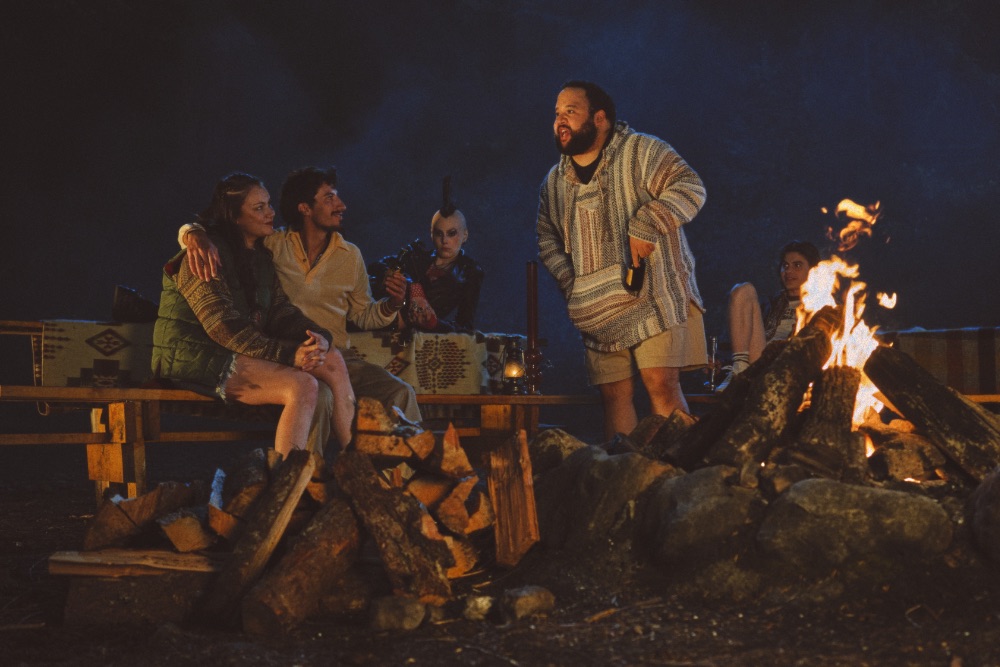
Miasma is the kind of movie that, the more you give yourself over to its deliciously strange rhythms and dreamy logic, the more it gives back. (This was true, too, of Schoenbrun’s previous film, 2024’s brilliant I Saw the TV Glow. Which was also fueled by the power of fandom.)
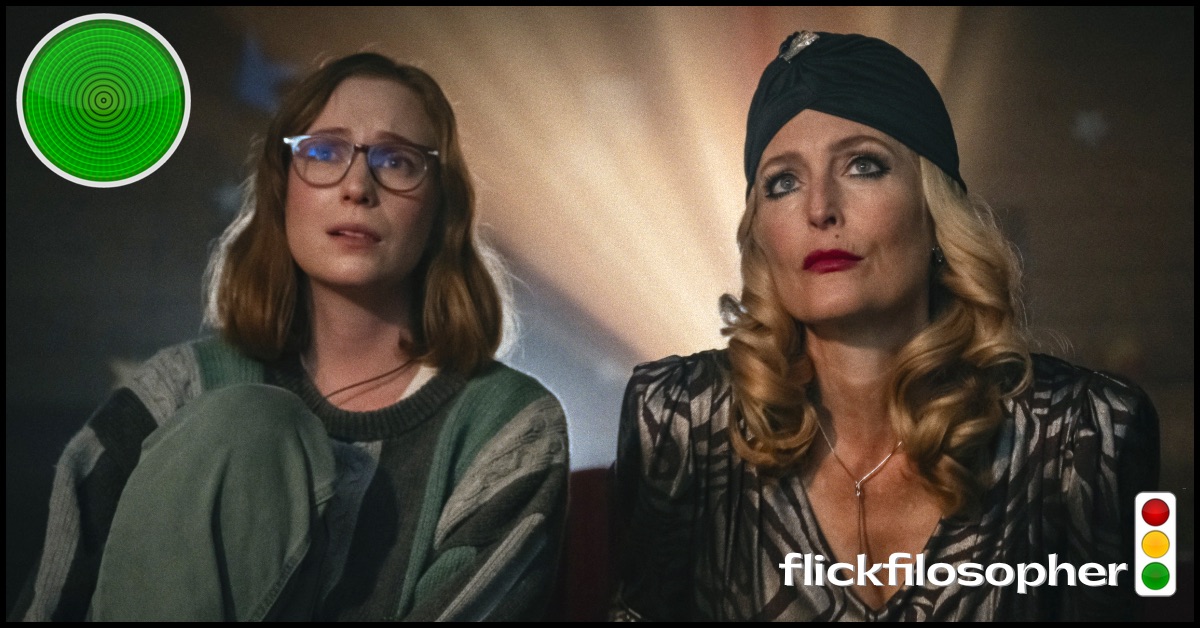
Giving herself over is tough, however, for the movie’s own protagonist, Kris (Hannah Einbinder), a tightly wound ball of anxiety and creative desperation. A filmmaker, she has been hired to reboot Camp Miasma, a once massively popular slasher franchise that descended from its 1980s glory into cheesy 90s direct-to-VHS sequels and now wallows in nostalgic cult memory. (Our Miasma’s opening credits, a meta level up, tell a nerdily detailed history of the franchise through props, posters, newspaper reviews and magazine features, and assorted merch and spinoff junk. It’s going to be so much fun freeze-framing every inch of this once the movie hits DVD. Enormous kudos to the design team.) As much as Kris is a huge Camp Miasma fan, she recognizes how problematic it was — the depiction of its killer, Little Death (*snort*), is now seen as transphobic — and with her indie sensibilities and decidedly nonheteronormative perspective, she is adamant: She is not going to blindly serve as the industry’s means to paper over its past while making toothless nods to modern progressivism. “I’m gonna beat Hollywood at their own game,” she insists.
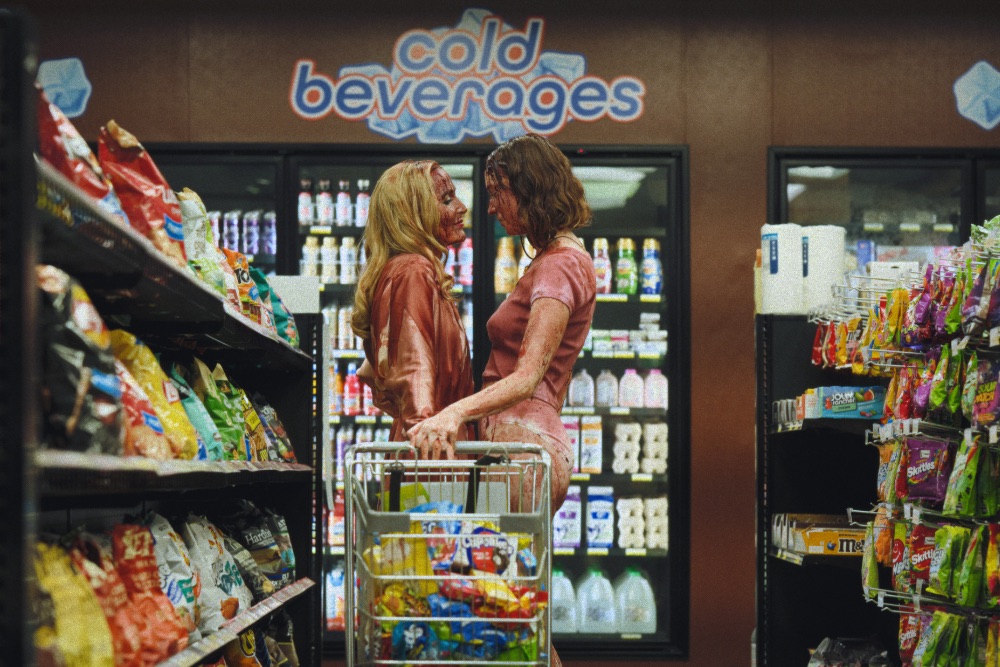
Kris is most definitely going to do something incredibly transgressive with her take on Camp Miasma. She just doesn’t know quite what that is yet. So in an attempt to get inspired and and really dig into upending everything about the franchise’s place in pop culture for her reboot, she travels to the real forest location of the titular summer camp… where the actress who played the original film’s “final girl,” Billy (Gillian Anderson: Viceroy’s House, Robot Overlords), now resides, alone, as a sort of Norma Desmond–esque recluse. The relationship that quickly develops between the women is complicated, transcending that of fan and idol, mentee and mentor, but also oddly simple: Both women have been shaped by the movie that connects them, probably not for the better. (The pas de deux between Kris and Billy, at the heart of the film, is powered by the delicious chemistry between Einbinder, who finds deep wells of expression in repression, and Anderson, saucily vamping it up.)
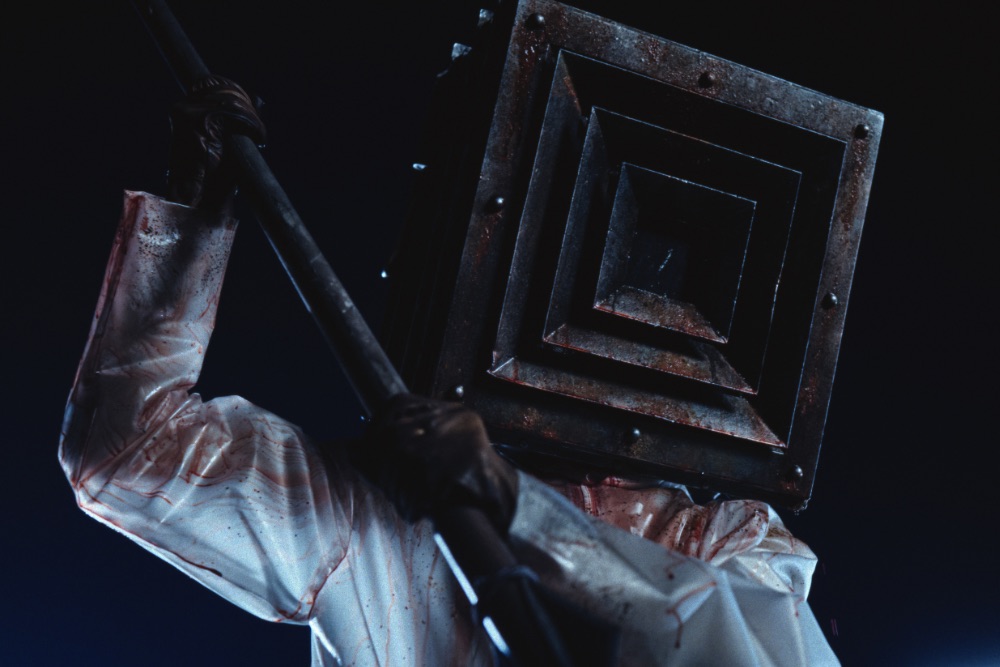
Via long “clips” of the 1980s flick — featuring Amanda Fix as the young Billy and Jack Haven (Bill & Ted Face the Music, Downsizing), mostly hidden behind a bizarre mask, as Little Death — sometimes as Kris and Billy watch it together, Schoenbrun explores notions of how pop culture shapes our sexuality, collectively and individually. Especially for women, especially as we women learn how to see ourselves via the male gaze that dominates the culture at large. Kris explicitly calls herself a lesbian, but her sexuality might most accurately be called “slasher final girl” — what turns her on is the perverse idea of being a virginal teen getting chased by a (read as male) homicidal maniac. Which she internalized watching Camp Miasma — and Billy’s depiction of a demure victim — as a too-young eight-year-old.
It’s easy to imagine that Kris is, for Schoenbrun, a self-insert — and boy, does “self-insert” suddenly sound all kinds of masturbatory, which could not be more perfect here. The filmmaker recently told Vulture, “I love television. I love American movies. And I also want to destroy them.” That love-hate will be very recognizable to anyone who has struggled, especially as a young person, to fit themselves into the narrow conformist boundaries of our culture — Schoenbrun is trans, nonbinary, and polyamorous — and has actively used fan culture as a way to make sense of who they are, perhaps not always in ways that are entirely healthy. I’m not sure there has never been a more “there’s no such thing as ‘just a movie’” movie than this one, and it is glorious to behold.
more films like this:
• Censor [Prime US | Prime UK | Apple TV | Kanopy US | BFI Player UK]
• Nurse Betty [Prime US | Prime UK | Apple TV]