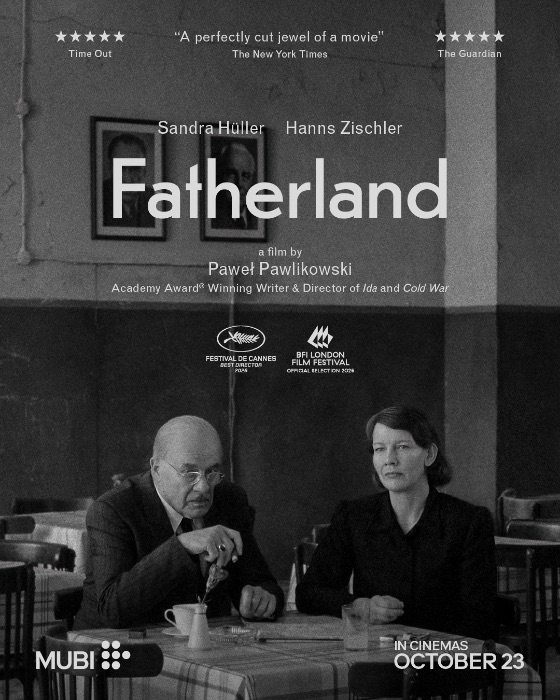
T he old world is dead, and a new world struggles to be born…
For more than a decade, Polish filmmaker Paweł Pawlikowski has been grappling with the contradictions of postwar Europe, in the clashing of both the newfound freedoms and the stifling communism that arose from the ashes of World War II. His Ida, from 2014, about a sheltered young nun in 1960s Poland, and 2018’s Cold War, about Polish musicians in the 1950s straining at the bounds of fascism, were hugely acclaimed: Ida won the Oscar for Best International Feature Film, and Pawlikowski took Best Director at the Cannes Film Festival for Cold War, among many other laurels. (I was mixed on both.)
But his latest, Fatherland, third in this thematic trilogy, is something subtly grander and much more profound: This feels like perhaps the first post-postwar film. As WWII moves out of living memory, the word postwar as we have been using it is starting to sound almost ludicrous. There been so many more wars in the interim 80 years, and if they haven’t been as globally impactful, other recent events do feel like big historical boundaries that may someday be seen as a dividing line between Before and After just as acute as WWII was: the 2008 financial crisis, perhaps, or the Covid pandemic. The “postwar” period is over, and we’ve moved on to a new era, and Fatherland seems to shudder with an awareness that the events it depicts and, more importantly, the context in which they are occurring are heralding the world to come.
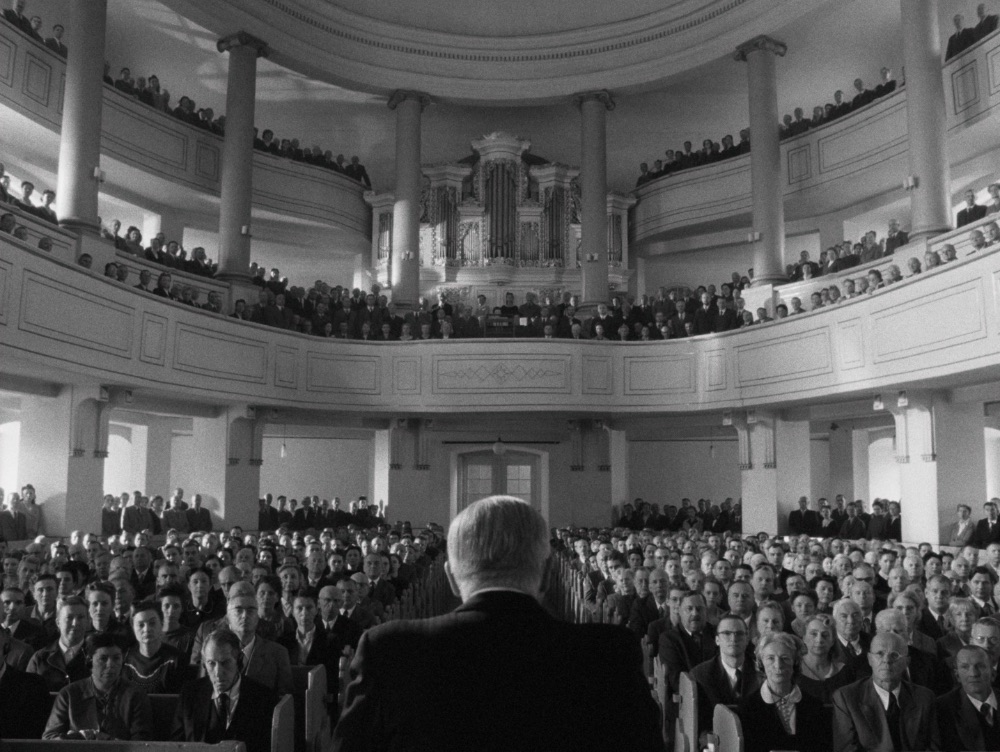
As with Pawlikowski’s other films in the trilogy, the political is sketched on a small, human scale here… though unlike in the other films, this one is loosely based on fact. It is 1949, and Nobel-laureate writer Thomas Mann (Hanns Zischler: Clouds of Sils Maria, Munich) returns home to Germany from a 16-year self-imposed exile in Los Angeles to receive a literary award. He is accompanied by his daughter, Erika (Sandra Hüller: Digger, Project Hail Mary), as they tour the war-ravaged nation, from US-occupied Frankfurt to Soviet-ruled Weimar. He is celebrated everywhere they go: There is “no higher authority in German letters”; he was also a loud anti-Nazi voice from afar, which, now that the war is over and the Nazis have been defeated, is another reason to honor him… with the barest of suggestions that, had the war gone another way, this might not be the case. The film’s sneer at the hypocrisy is muted but palpable: The one day that everyone will have always been against this has now come.
This is Sandra Hüller’s movie, which is true of almost everything she appears in, and she seems to shimmer with the constant skittishness her Erika and her father endure on their tour, slightly astonished and somewhat baffled by everything they see and hear: This is not the Germany they left, of course, but is it even one they can be comfortable in now, or ever again? The Nazi hangover they run into everywhere they go is intense and lingering. One potent scene sees Erika at a cocktail party for her father, where she has an edgy encounter with her ex (Joachim Meyerhoff), an actor who remained in Germany and embraced the ruling regime, unlike her father and other creatives who fled. (She holds him in nothing but contempt.) Hints of the nightmares that will unfold in coming decades abound, too: Erika and her father’s foray into East Germany, in particular their stop at an austere restaurant, highlights the cold deprivation taking shape behind the Iron Curtain.
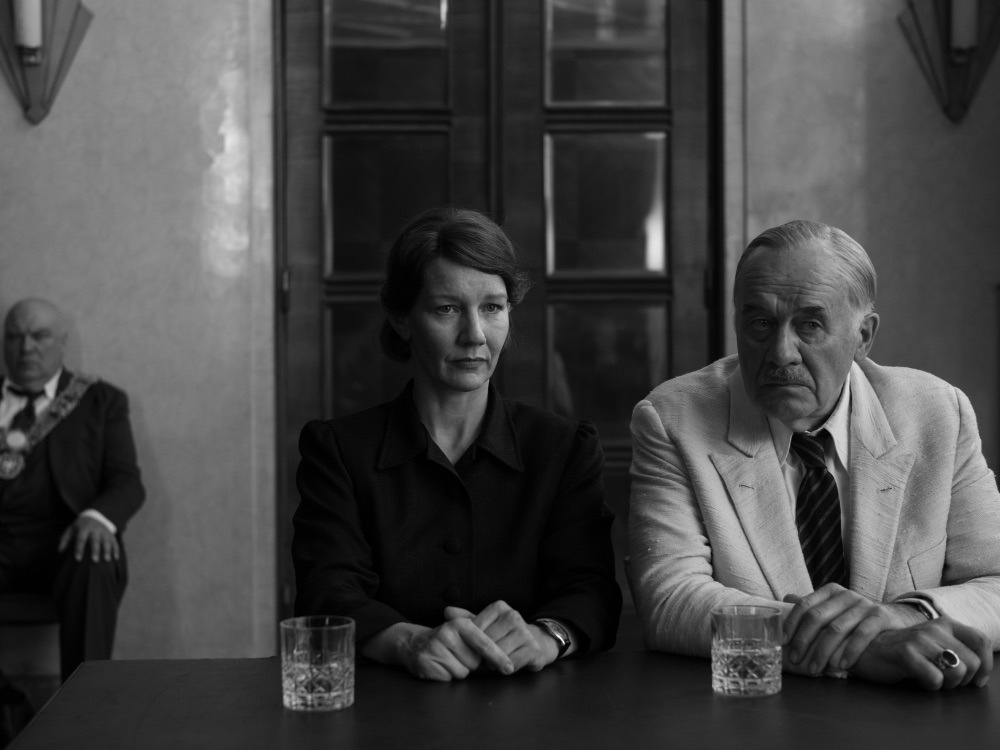
The Manns’ relationship with son and brother Klaus (August Diehl: Munich: The Edge of War, Allied), also a writer but foundering, is woven though their road trip through this new Germany, a connection physically tenuous — conducted over long-distance phone calls; he is elsewhere in Western Europe — but emotionally riveting. Erika’s vision of her brother in the audience of one of her father’s public appearances is particularly moving, a tender expression of how he is always on her mind. It’s also a lovely declaration of the depth cross-gender sibling relationships can have, which is so often overlooked onscreen.
This is the ethos that hovers over the melancholy Fatherland: Leaving home may have gotten easier in a rapidly interconnecting world of easy international travel and instant global communication, but loyalties fractured are paradoxically harder to heal when ties that one can never quite break make it more difficult to embark on a fresh start. “Let’s go home,” Erika sighs to her father as their tour drags on. “Where is that?” he wonders.
I can say this: I’m an American who left the US in 2011, before the horrors that descended with the rise of Donald Trump, but not before the warning signs were already flashing. And I have been watching with dread from a distance — if less of a cultural distance than that of the world the Manns lived in — since then. No film that I have seen in recent years has made me shudder in my sense of national identity like Fatherland has. There are many of us on this planet — not only Americans — who should tremble to think that the future holds a reckoning for us similar to the one Erika and her father face here.
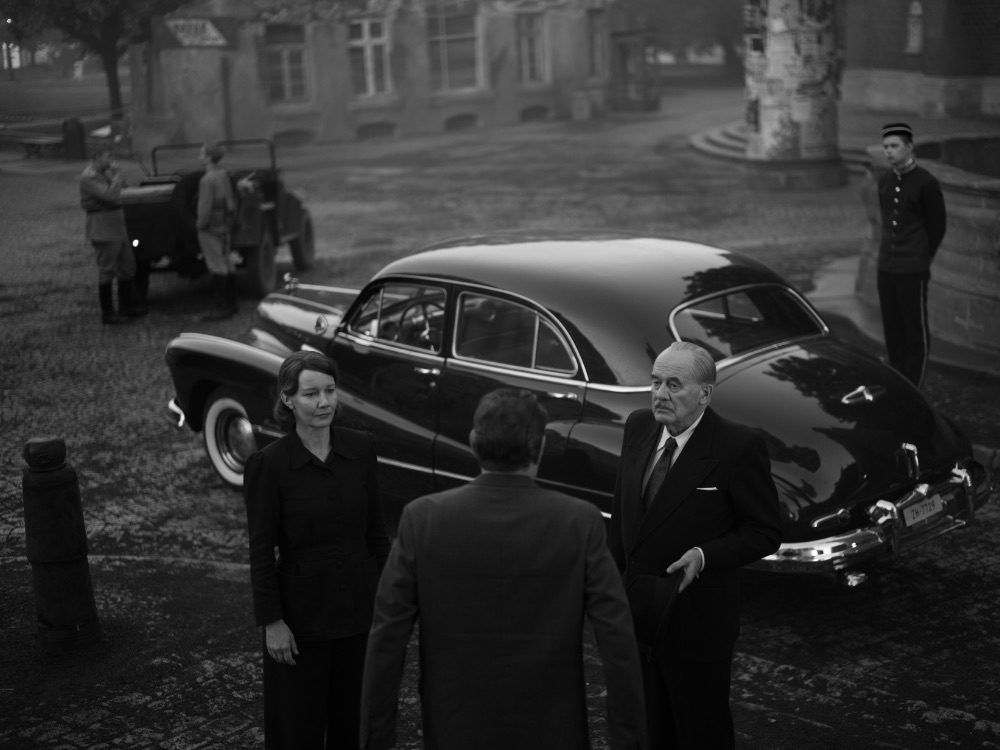
My one negative criticism of Fatherland is that the script, by Pawlikowski and Henk Handloegten, entirely glosses over the real Erika’s own significant accomplishments as an actress, writer, and *checks notes* *blinks* rally driver. She is cast here, for the most part, as little more than her elderly father’s carer, even though she is nominally the protagonist, even above her father: He is of the world that is past and gone, but she has much more life to live in the new world taking shape. Yet her achievements are barely mentioned. She was married to British-American poet WH Auden; it was only a marriage of convenience but they were close. A few scenes suggest a romantic entanglement with an American journalist played by Anna Madeley (The Mercy, In Bruges), but that goes nowhere. Hüller has said that Erika Mann is a figure “iconic” in Germany. I wish something more than Hüller’s force-of-nature performance even alluded to that here. I want to see an entire movie about Erika Mann’s incredible, vital existence. Preferably soon, with Hüller portraying her again.
But that is a minor complaint. This is an elegantly compact — under 90 minutes! — contemplation of national devastation through a personal lens. Regular Pawlikowski collaborator cinematographer Lukasz Zal deploys his sumptuous black-and-white photography once again to craft a stark, staid portrait of grief and frustrated identity in the wake of societal upheaval. But the true power of Fatherland is in its warning for us today: that the paths we’re on now are setting us up for the kind of regret and sorrow that Thomas, Erika, and Klaus experience here. The post-postwar vibe may, in fact, be a prewar… a presomething premonition.
more films like this:
• The Zone of Interest [Prime US | Prime UK | Apple TV | Curzon Home Cinema UK]
• Europa [Prime UK | Apple TV | Mubi US | Curzon Home Cinema UK]