

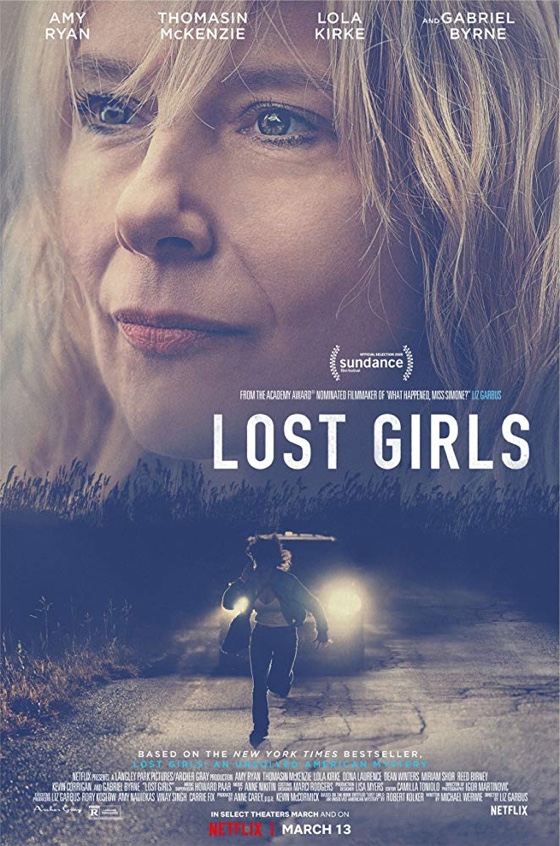
It seems churlish to say such a thing about a clearly very necessary film, but Netflix’s Lost Girls isn’t terribly engaging. That’s a problem, because the way to bring in the audience that needs to see it most is to be as gripping as possible. A spoonful of sugar, and all that. I hate that I feel this way. I don’t want a movie about something as serious as this to be “entertaining.” But I do want folks to see it and stick with it long enough to actually hear what it has to say.
On paper, Lost Girls sounds electrifying. This first narrative feature from documentarian Liz Garbus — twice nominated for an Oscar, most recently for 2015’s What Happened, Miss Simone? — offers exactly the sort of twist on a familiar story I would expect from a filmmaker like Garbus, who has long been a champion for the girls and women our society misunderstands and overlooks. (See also: her 2003 documentary Girlhood.) Movies about murdered prostitutes and serial killers who prey on women are so ubiquitous as to be banal, and — perhaps not even shockingly — these stories tend to be about the cops or lawyers investigating the crimes to which they have fallen victim, and not about the women themselves. Violence against women is a tired trope of cinema, but almost exclusively as a means to prod men onto personal journeys or to provoke inciting emotions (ie, a desire for rescue or revenge) in male protagonists. The women are afterthoughts, often anonymous, usually barely even characters in these stories.
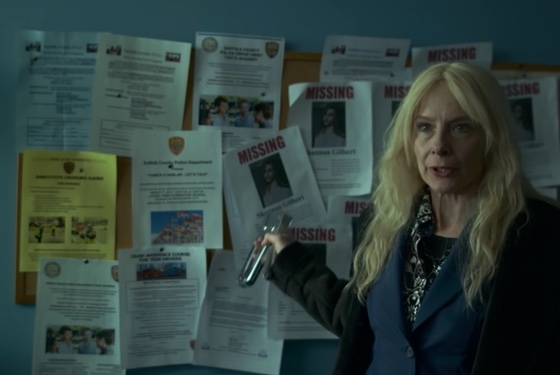
But Garbus puts the focus where it belongs, and where it should always have been: on the women. This is true: in 2010, 20something aspiring singer Shannen Gilbert went missing while working as a prostitute, and police did nothing about it until her mother, Mari, raised holy hell. Amy Ryan (Late Night, Beautiful Boy) — another Oscar nominee here, for her astonishing performance in 2008’s Gone Baby Gone — is her typical absolutely badass steely self as Mari, who is forced to conduct her own investigation into Shannen’s (very briefly, Sarah Wisser) disappearance. With little to go on, Mari tracks Shannen’s last known location down to a place where her daughter had no known connections, on Long Island’s South Shore, and far from Mari’s home in upstate New York, and from Shannen’s in New Jersey. Mari makes an absolute pain the ass of herself with the local cops (Gabriel Byrne [Hereditary, Carrie Pilby] and Dean Winters [John Wick, P.S. I Love You]) until they agree to take Shannen’s disappearance seriously. And once these men who don’t think one more missing hooker is a big deal start looking into it, they find evidence of lots more crimes against women, to the point where they can no longer ignore any of them.
Soon the sisters and mothers and friends of other missing prostitutes are joining up to crusade on behalf of their loved ones. And Lost Girls becomes a sort of elegy for not only sex workers who often so suffer so dearly, and so invisibly, in our culture, but also women like Mari: struggling as a single mother working multiple jobs just to get by, and often accepting money from Shannen to help with her other, younger daughters, Sherre (Thomasin McKenzie: The Hobbit: The Battle of the Five Armies) and Sarra (Oona Laurence: A Bad Moms Christmas, The Beguiled). Sarra has mental health issues, as Mari does herself, that Mari can’t seem to get any real help for… and the ways Mari herself has often coped — as by letting her girls be taken into foster care when she wasn’t able to care for them — often bring her in for criticism. As if she wasn’t and isn’t constantly doing the absolute best she can in impossible circumstances with little to no assistance or respite.
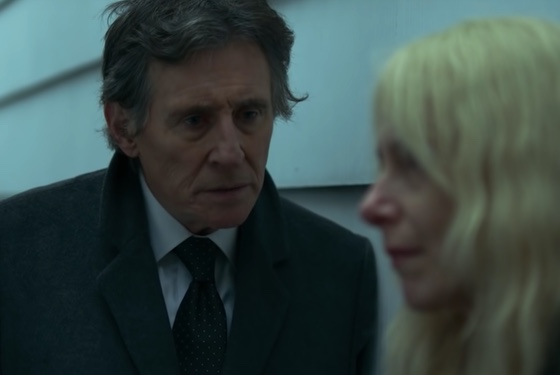
All that said, there’s something rote and even trite about Michael Werwie’s script. (It’s based on a nonfiction book by Robert Kolker, which is in turn based on his own 2011 New York magazine article “A Serial Killer in Common.” You can read that online, though it isn’t as up to date as the book and the film.) Ryan’s fierce central performance and Garbus’s profound empathy cannot quite overcome the fact that Lost Girls never quite delves into the reason its girls and women are so lost, only skims the obvious clichés about working-class women, the lack of decent mental-health care and a strong social safety net, and what drives desperate women to dangerous sex work in modern America. Ryan’s Mari — and the real Mari Gilbert, who went on to advocate for other women like her daughter — is a terrific voice for all the women our society is all too happy to forget. But Lost Girls seems not to quite understand why such advocacy is needed.
Lost Girls was the Alliance of Women Film Journalists’ Movie of the Week for March 13th. Read the comments from AWFJ members — including me — on why the film deserves this honor.


















Damn. I was reading down the page and hadn’t recognized the story until a scroll took me to the first picture of Mari, and it suddenly reminded me of – oh, wait! Her! It becomes clear that this is indeed *that* Lost Girls. I read the book several months ago, and it was stunning. What you say in the review about the circumstances and issue is spot on, it brought to mind the girls’ backstories, how they were mundane and tragic at the same time. It’s too bad the movie doesn’t strike the right chord. Ii would have wanted to see it.